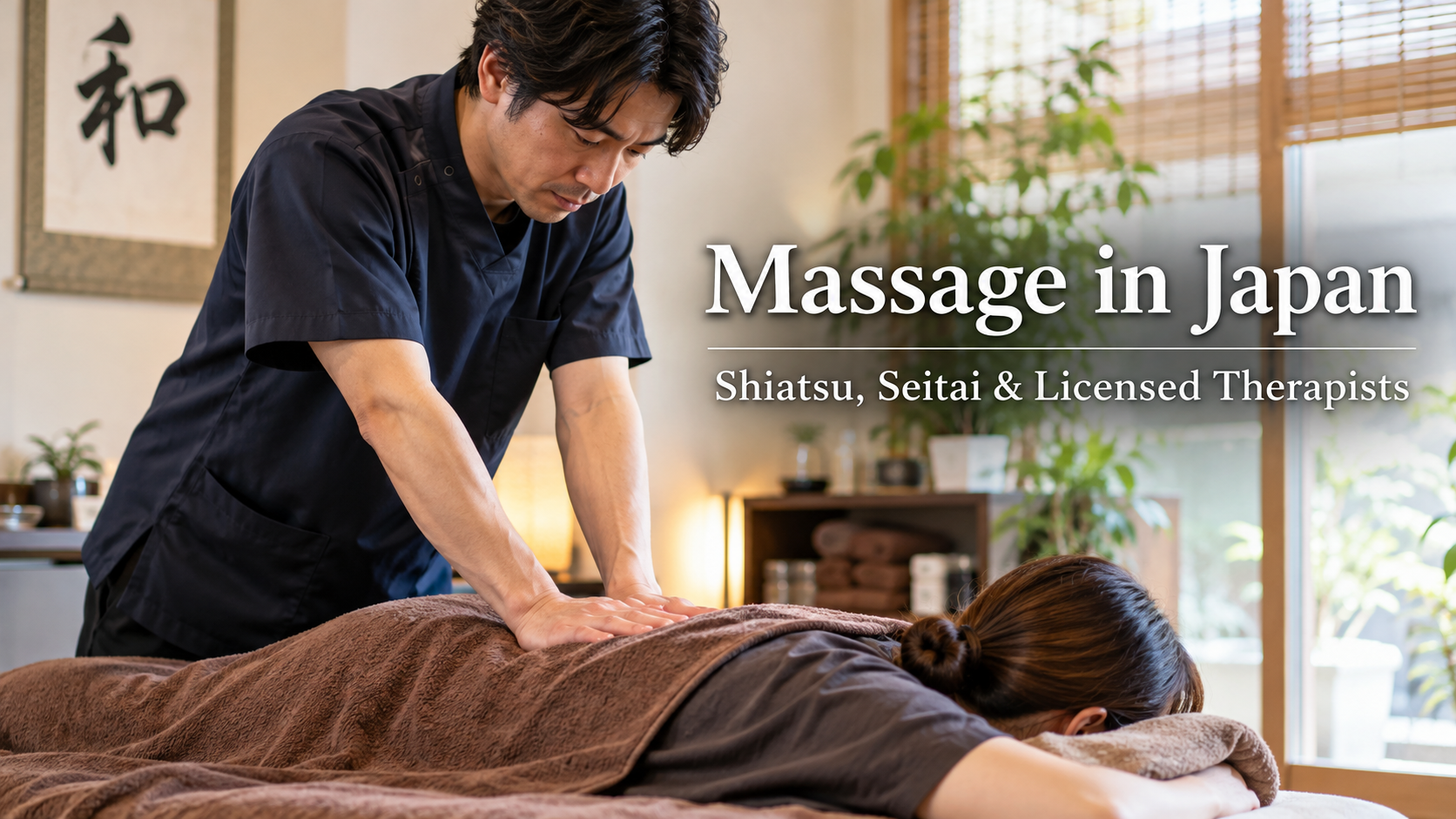
A client once told me they thought a seitai practitioner held a higher qualification than a massage therapist.
That surprised me, although I could understand the confusion.
I’ve worked as a nationally licensed anma massage shiatsu practitioner in Japan for around 20 years. My experience includes orthopedic clinics, elderly care facilities, and home-visit massage services. Even among Japanese clients, I’ve found that the differences between massage, seitai, and other forms of bodywork aren’t always well understood.
For travelers, the terminology can be particularly confusing. A small neighborhood clinic, a relaxation salon near a railway station, and a traditional shiatsu establishment may offer treatments that look similar. Yet the qualifications behind them can be very different.
Here’s how to understand those differences, what to expect during a session, and what to check before booking.
1. Shiatsu, Seitai, and Relaxation: What’s the Difference?
Japan has a national licensing system for certain types of hands-on treatment. However, not every establishment offering bodywork operates under the same qualifications.
Licensed Anma Massage Shiatsu Practitioners
An anma massage shiatsu practitioner (あん摩マッサージ指圧師) holds a Japanese national license.
The standard route requires at least three years of education at an approved institution, followed by passing a national examination.
The qualification covers three related approaches:
- Anma: Traditional Japanese manual techniques involving pressing, kneading, and other movements.
- Massage: Techniques that may include stroking, rubbing, and kneading.
- Shiatsu: Pressure-based techniques commonly performed using fingers and palms.
Outside Japan, shiatsu is often presented as a treatment on a spa menu. In Japan, it is also part of the name of a legally regulated profession.
What About Seitai and Relaxation Salons?
Seitai (整体) is a broad term for Japanese bodywork, sometimes translated as body alignment.
There is no national qualification specifically called a seitai practitioner. Training and techniques vary between establishments, and some practitioners hold other professional licenses.
I’ve met clients who believed seitai was a higher qualification than massage. In fact, the two terms are not different levels of the same licensing system.
Relaxation salons introduce another set of terms, including body care and momihogushi (揉みほぐし), commonly used to describe kneading-style bodywork.
Japanese law generally requires the appropriate license to perform anma, massage, or shiatsu professionally, unless the practitioner is a physician. A relaxation service’s name alone, however, does not establish the practitioner’s qualifications or the legal classification of the techniques being offered.
| Type | Japanese term | Qualification |
|---|---|---|
| Anma Massage Shiatsu | あん摩マッサージ指圧 | National license |
| Seitai | 整体 | No national license specifically called seitai |
| Relaxation / Body Care | リラクゼーション・もみほぐし | Service names, not national qualifications |
| Bonesetting clinic | 整骨院・接骨院 | Judo therapist (柔道整復師) |
| Acupuncture clinic | 鍼灸院 | Acupuncturist and moxibustion practitioner (はり師・きゅう師) |
Bonesetting and acupuncture clinics are not simply alternative names for massage establishments. They involve different professional qualifications and scopes of practice.
2. How to Check a Massage Therapist’s Qualifications
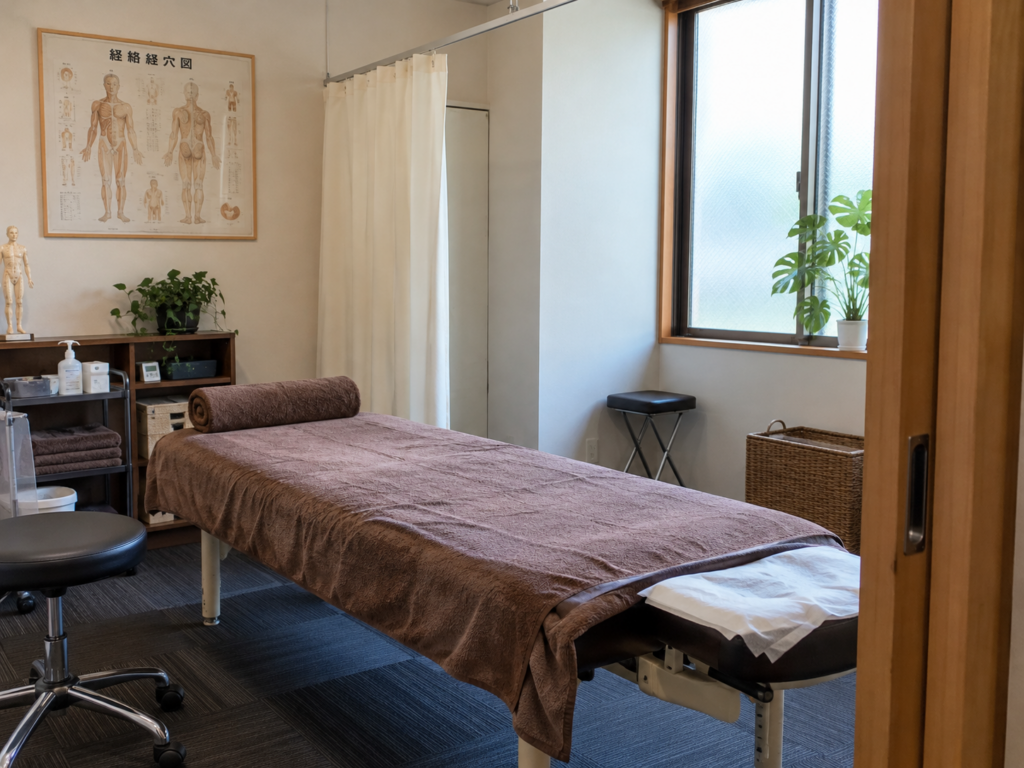
One unusual aspect of Japan’s massage industry is how establishments advertise themselves.
Licensed massage practices are subject to legal advertising restrictions, including limits on certain promotional claims and the information that can be advertised.
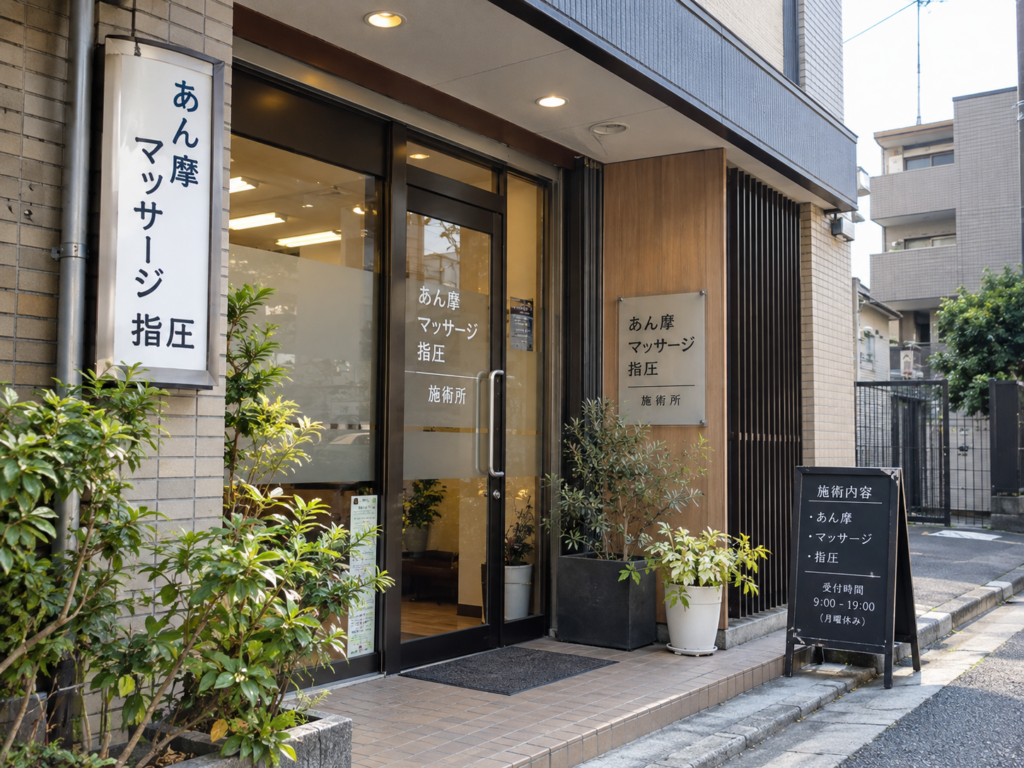
That doesn’t mean a brightly decorated salon is necessarily unlicensed, or that a traditional-looking clinic must employ qualified practitioners.
A better approach is to ask directly about the practitioner who will provide your session.
If you want a nationally licensed massage practitioner, look for this qualification:
あん摩マッサージ指圧師 — Anma Massage Shiatsu Practitioner
You can ask:
Japanese: あん摩マッサージ指圧師の資格はお持ちですか?
Romaji: Anma massāji shiatsu-shi no shikaku wa omochi desu ka?
English: Do you hold an anma massage shiatsu practitioner license?
Some establishments display information about professional qualifications. You can also ask to see the practitioner’s credentials.
Clients have asked me about my license before. From my perspective, it’s a perfectly reasonable question, especially when someone is receiving a service for the first time.
Japan’s Ministry of Health, Labour and Welfare provides information about the national qualifications for massage, acupuncture, moxibustion, and judo therapy.
If qualifications matter to you, checking them directly is more useful than judging an establishment by its appearance.
3. How Much Does a Massage Cost in Japan?
Prices vary considerably depending on the establishment, location, and session length.
From my experience working at different facilities, around ¥1,000 per ten minutes has been a familiar reference point for privately paid massage services. A 60-minute session would therefore cost approximately ¥6,000 before any longer-session discounts.
Relaxation chains sometimes offer lower prices.
For comparison, here are two examples from official published menus:
| Business | Example 60-minute price | Details |
|---|---|---|
| Riraku (りらくる) | ¥3,600 | App-member price for momihogushi; location and holiday conditions may affect the price |
| Raffine (ラフィネ) | ¥7,200 | Body Care course at Senri-Chuo Station, one store in Osaka Prefecture, effective October 1, 2026 |
These are specific published examples rather than a nationwide price comparison.
Check the latest information on the Riraku official website and the Raffine official website.
Before booking, confirm whether the displayed price includes everything. Some establishments charge extra for requesting a particular practitioner, renting clothes, or extending a session.
Price alone doesn’t tell you whether someone holds a national license.
4. What to Expect During a Japanese Massage
For a first-time visitor, practical questions can be just as important as professional qualifications.
What should you wear? Will the practitioner ask about your health? And will the massage hurt?
Before the Session
When I see a client for the first time, I begin by asking about their current physical condition.
I also check whether they are receiving medical care and, if so, what kind of treatment they are undergoing.
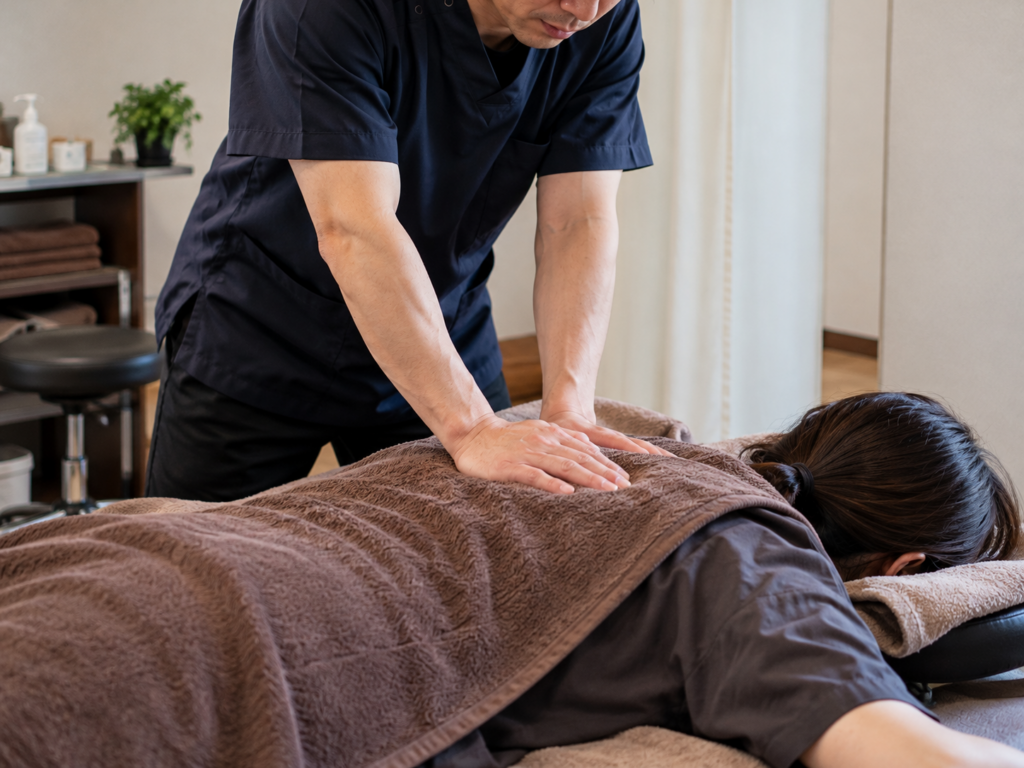
In my own practice, I generally ask clients to wear comfortable clothing that allows movement. Jeans and skirts are unsuitable for the techniques I use.
I also use towels or traditional Japanese hand towels (tenugui) so that I can work through fabric rather than directly on exposed skin.
Other establishments may provide changing clothes or use different techniques. Some offer oil-based treatments, while others work entirely through clothing.
If you have an injury, significant medical condition, or uncertainty about whether bodywork is appropriate, seek medical advice before booking.
During the Session: Will It Hurt?
Japanese massage is sometimes associated with firm pressure, particularly techniques involving kneading or shiatsu.
In my own work, I usually massage the body as a whole while giving extra attention to areas the client finds uncomfortable.
Occasionally, clients ask me to adjust the pressure. I aim for a level that feels pleasantly firm without becoming unpleasant.
There’s a Japanese expression, ita-kimochii (痛気持ちいい), which describes a sensation somewhere between painful and pleasant.
You may hear this expression in conversations about massage, but it doesn’t mean that pain is necessary or that stronger pressure produces better results.
I haven’t personally treated international visitors, so I can’t speak from experience about how people from different countries respond. But if you’re unfamiliar with Japanese kneading or pressure techniques, I would suggest starting with gentler pressure and adjusting from there.
You can use these phrases during a session:
| Japanese | Romaji | English |
|---|---|---|
| もう少し弱くしてください | Mō sukoshi yowaku shite kudasai | A little gentler, please |
| 少し強くしてください | Sukoshi tsuyoku shite kudasai | A little firmer, please |
| ここがつらいです | Koko ga tsurai desu | This area is bothering me |
| 痛いです | Itai desu | That hurts |
| やめてください | Yamete kudasai | Please stop |
You don’t need fluent Japanese to communicate. Even a few words or a translation app can help.
5. Another Side of Japanese Massage: Home Visits
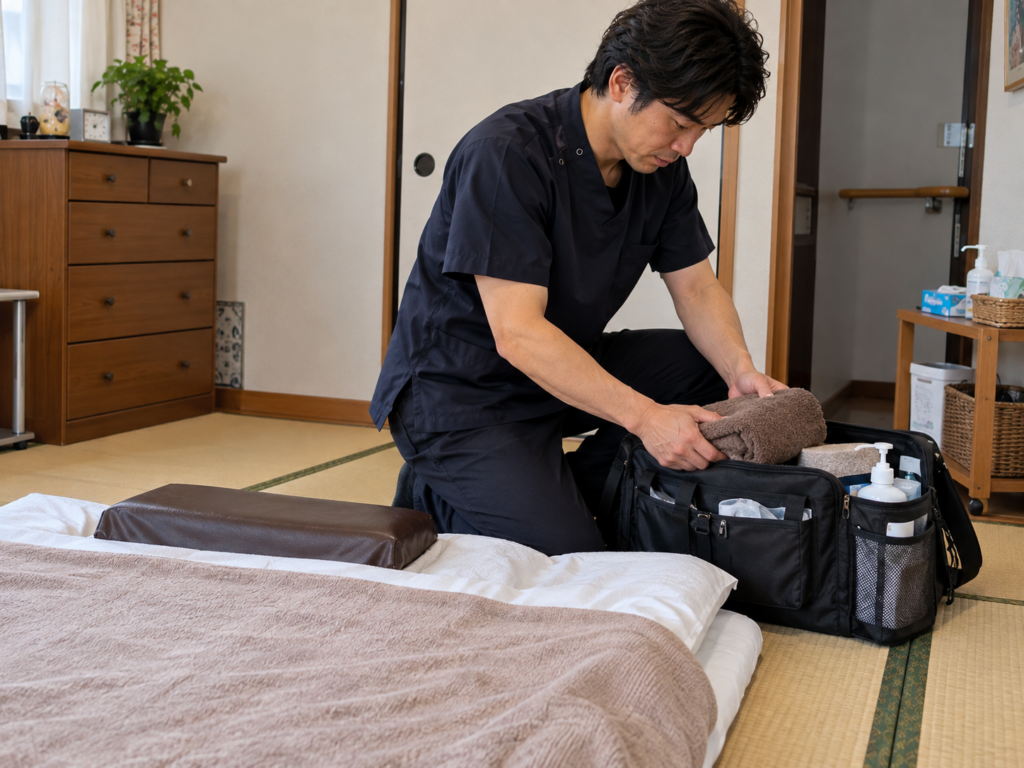
Most visitors associate Japanese massage with shops, clinics, or relaxation salons. But much of my professional life takes place somewhere else: people’s homes.
I regularly visit people who have difficulty traveling independently to a medical facility. Some live at home, while others are in care facilities.
A typical visit begins with a greeting, followed by checking vital signs and asking about the person’s current condition.
I then provide massage, followed by exercises or movement-related activities suited to the person’s circumstances. After finishing, I say goodbye and leave for my next appointment.
Most sessions take place on a bed, although I occasionally work with someone lying on a futon on the floor.
This kind of work is different from the massage experience a tourist might book during a holiday.
Massage and Movement in Everyday Life
One experience that has stayed with me involves a patient who initially couldn’t walk but eventually became able to walk with light assistance or a walking aid.
It took a little over a year, as I remember it. We worked together over that time, taking things step by step.
Seeing that progress made me genuinely happy. It felt like the result of something we had worked toward together, rather than something I had simply done for the patient.
Of course, I wouldn’t attribute the improvement to massage alone. Physical function can be influenced by medical care, exercise, and many other factors.
In my experience, home-visit massage often involves movement-related exercises alongside hands-on treatment. My background in orthopedic clinics and elderly care facilities has also shaped how I approach these visits.
Japan has a public health insurance reimbursement system for certain massage services. Under that system, a physician’s consent is required, and covered home visits have additional conditions.
These services are different from privately arranging for a massage practitioner to visit a hotel or home.
For travelers, this may be a less familiar side of Japanese massage, but it illustrates how the profession extends beyond relaxation salons and tourist-oriented services.
6. Before You Book: A Simple Checklist
Before booking a massage or bodywork session in Japan, check a few practical details:
- Type of service: Is it licensed massage, seitai, relaxation body care, or something else?
- Qualifications: If you want a nationally licensed practitioner, ask about the credentials of the person providing the session.
- Price: Confirm the total charge, duration, and any additional fees.
- Clothing: Ask whether you should arrive in comfortable clothes or whether changing clothes are provided.
- Health information: Mention relevant conditions or concerns before the session.
- Pressure: Start gently if you’re unsure, and ask for adjustments whenever necessary.
- Reservations: Check language support, payment methods, and cancellation rules.
During my years as a practitioner, I’ve been asked about my qualifications more than once. I’ve never thought it was a strange question. If you’re trusting someone to work on your body, wanting to know who they are and what training they have is only natural.
About the Author
The author of JapanBluePrint is a nationally licensed anma massage shiatsu practitioner in Japan with approximately 20 years of professional experience, including work in orthopedic clinics, elderly care facilities, and home-visit massage services.

Sources and Further Reading
- Ministry of Health, Labour and Welfare — Anma Massage Shiatsu National Examination
- Ministry of Health, Labour and Welfare — National Qualifications and Advertising Guidelines
- e-Gov — Act on Practitioners of Massage, Acupuncture and Moxibustion (Japanese)
- Ministry of Health, Labour and Welfare — Massage and Acupuncture Insurance Reimbursement Overview (PDF, Japanese)
- Riraku — Official Website
- Raffine — Official Website
Related Reading on JapanBluePrint
Why Japanese People Wash Before They Bathe — A look at another part of everyday Japanese body-care culture.