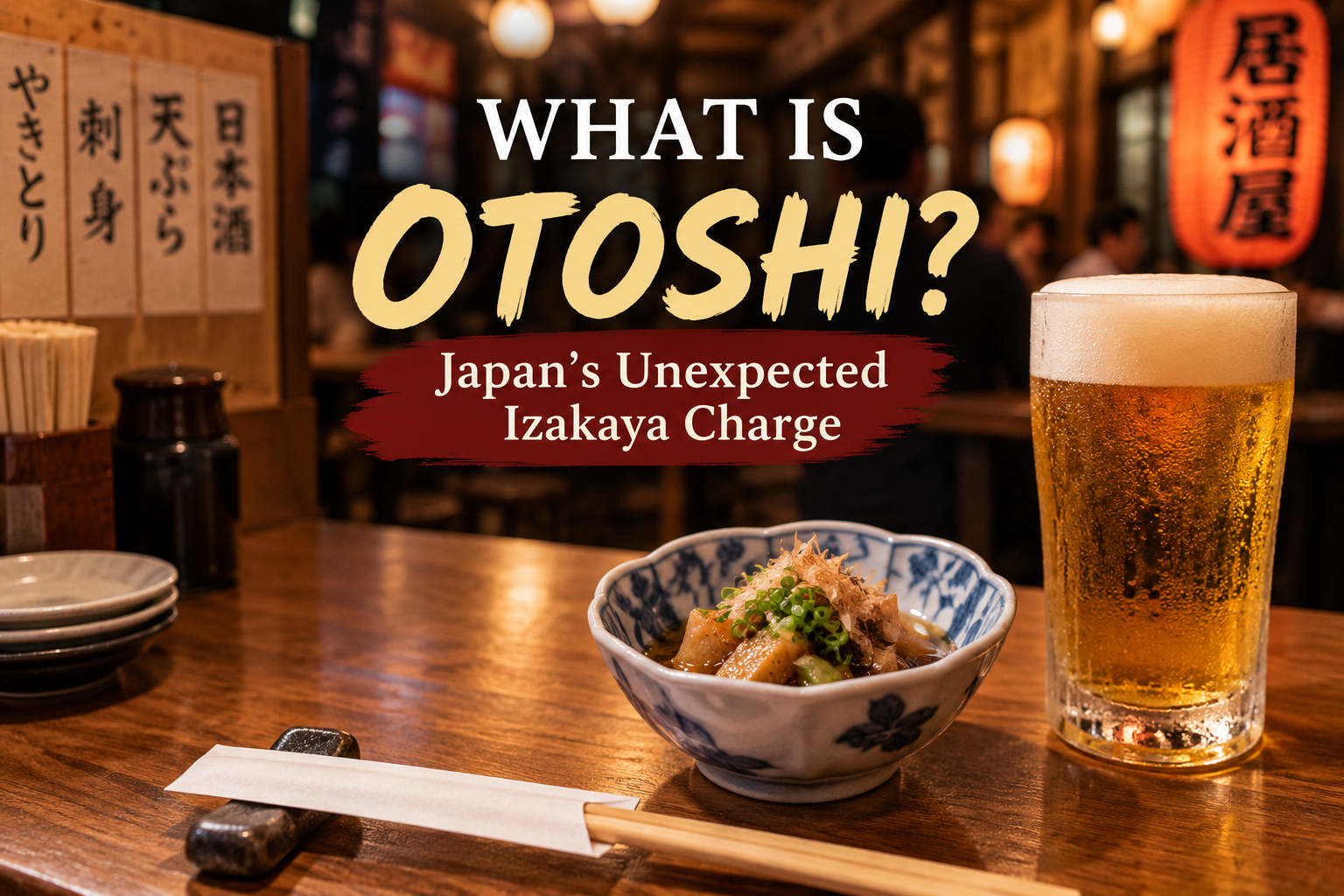
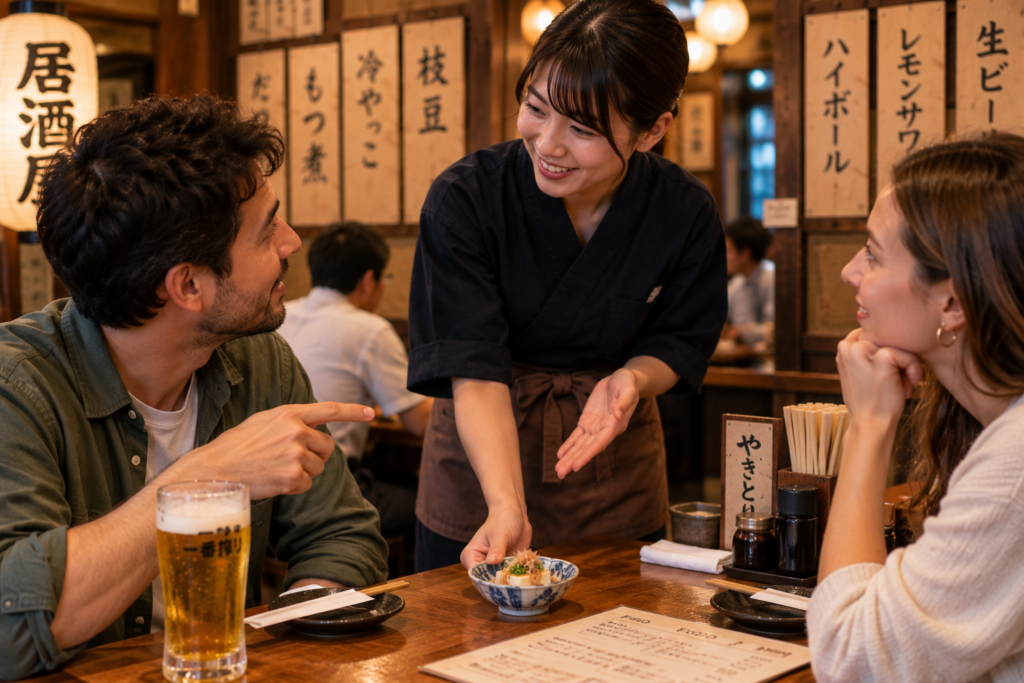
You sit down at an izakaya in Japan, order a drink, and a small dish appears on the table.
You did not order it.
Maybe it is edamame, simmered vegetables, tofu, fish, pickles, or something you cannot immediately identify. You might assume it is complimentary.
Then the bill arrives, and there is a charge for it.
For first-time visitors, the reaction is understandable: “Why am I paying for food I never ordered?”
That small dish is called otoshi . At many Japanese izakaya, it is served automatically and usually comes with a per-person charge. Japan’s National Consumer Affairs Center explains it to overseas visitors as something that can be thought of as a table charge, although restaurants may also have separate charges.
For Japanese customers who are used to izakaya, the system can feel so ordinary that we barely think about it. For visitors encountering it for the first time, however, it can seem like one of Japan’s strangest restaurant customs.
So what exactly are you paying for? Can you refuse it? And is otoshi really as old a tradition as it looks?
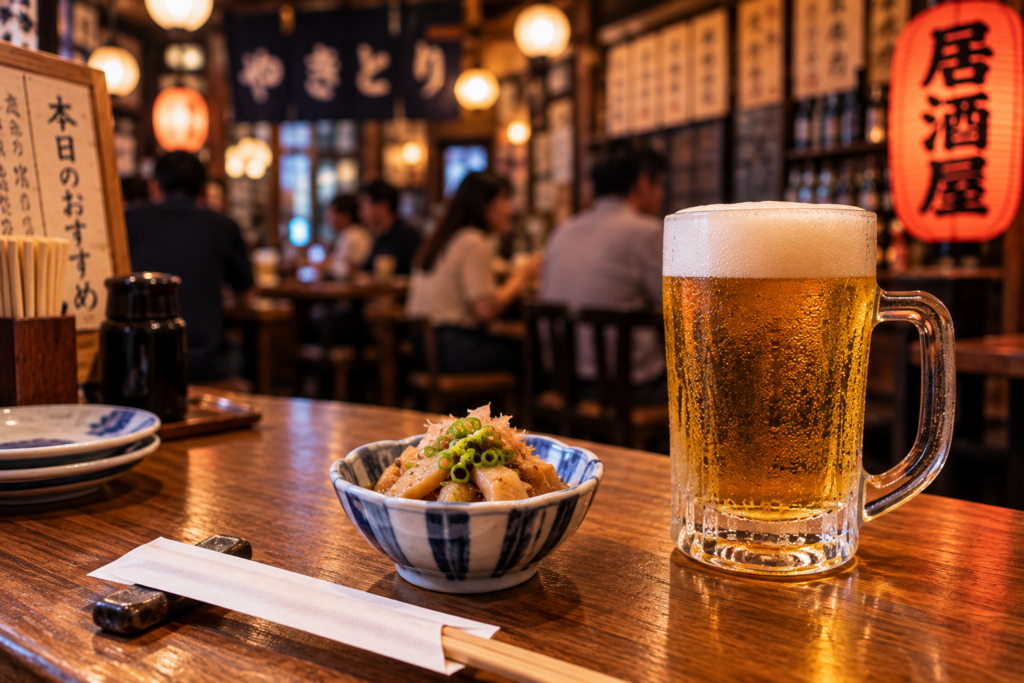
What Exactly Is Otoshi?
Otoshi is a small dish served soon after you sit down at many izakaya, often before the food you actually ordered arrives.
The unusual part is that you normally do not choose it. Unlike ordering yakitori, sashimi, or karaage, you generally do not say, “I’ll have the otoshi.” The restaurant decides what to serve, and you may not know what it will be until it reaches your table.
One night it might be a simple cold dish. Somewhere else, it might be a carefully prepared appetizer that could almost belong on the regular menu.
Otoshi is common, but not universal, and restaurants handle it differently.
The simplest useful explanation is this: otoshi is an automatically served small dish that often functions as part of a per-person cover or table charge.
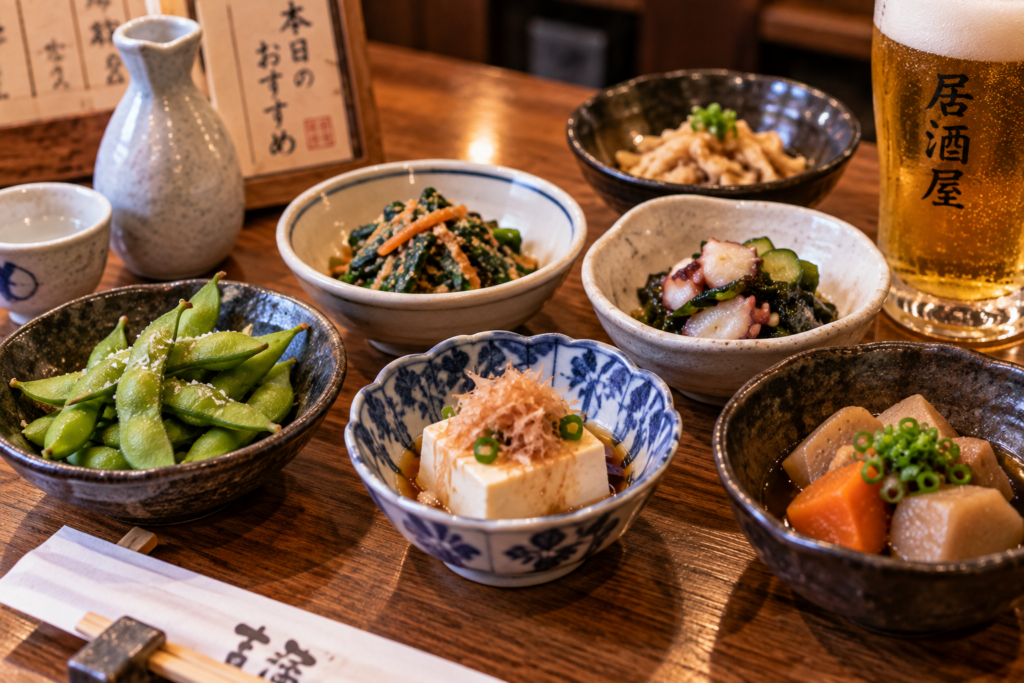
Why Does Japan Have Otoshi?
One practical explanation is timing.
At an izakaya, drinks can arrive quickly while cooked dishes take longer. Otoshi gives customers something small to eat while they wait. Japan’s National Consumer Affairs Center explains the custom to overseas visitors in essentially this way.
Today, otoshi also often functions economically much like a small per-person cover charge.
That does not mean every otoshi charge is literally a seat fee. A restaurant may treat otoshi, a seating charge, or another service-related charge differently. In some cases, an additional charge may appear alongside the otoshi charge.
For travelers, the practical lesson is simple: if a menu or bill contains a charge you do not understand, ask what it is.
Otoshi or Tsukidashi?
Travel around Japan and you may hear another word: tsukidashi.
The two terms generally refer to the same basic idea. Reference material in Japan’s Collaborative Reference Database describes otoshi as a term associated more with eastern Japan, while tsukidashi is traditionally associated more with western Japan, including Kansai.
Actual usage does not follow a perfectly clean geographic boundary. But if you hear “tsukidashi” in Osaka after learning about “otoshi” in Tokyo, you have probably not encountered a completely different system.
How Much Does Otoshi Cost?
There is no official nationwide price.
A few hundred yen per person is a useful general expectation, but prices vary by restaurant, location, and type of establishment. The dish itself varies just as much.
Personally, I regard otoshi as something that simply comes with going to an izakaya. I do not normally check the menu specifically to find out how much it costs.
But being accustomed to the custom does not mean price never matters. If an otoshi costs around ¥800 to ¥1,000, I personally start to feel that it is expensive.
And sometimes the food itself is memorable. I once had an otoshi that was good enough that I asked for another serving. At that particular restaurant, I was not charged extra for the second one—but I would never assume that applies everywhere.
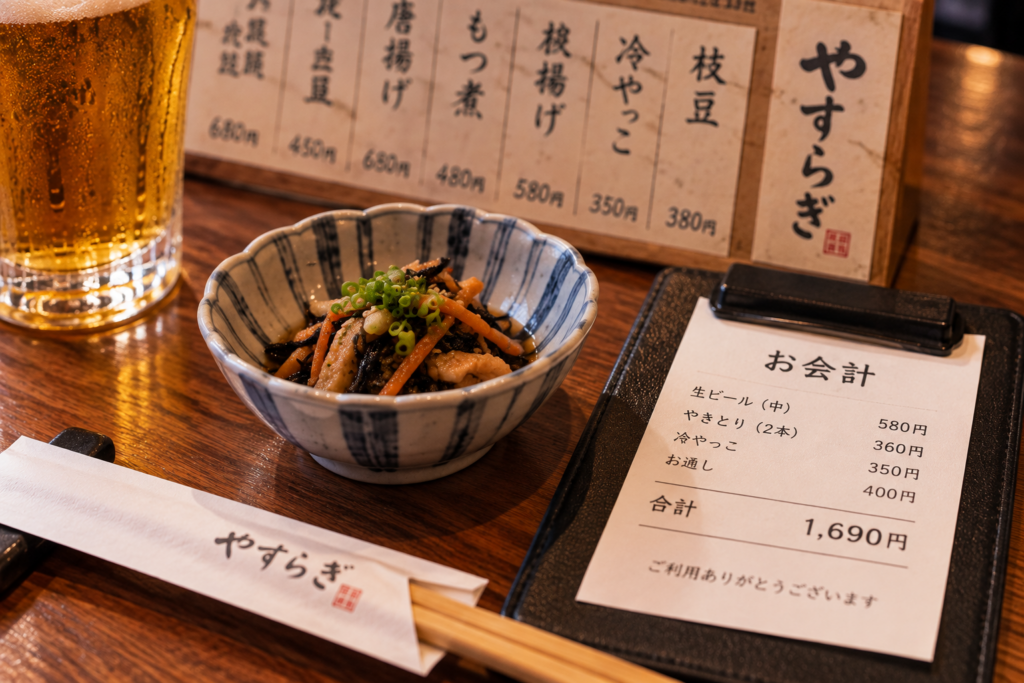
What Otoshi Feels Like to a Japanese Customer
For me, the most interesting part of otoshi is the gap between how ordinary it feels from inside Japan and how strange it sounds when explained from the outside.
When I enter an izakaya and an otoshi appears, my reaction is basically: of course there is an otoshi.
I do not think of it as something I actively ordered, but I also do not assume it is a free gift. I rarely check the menu specifically to see whether an otoshi charge is listed.
If a foreign visitor asked me why they were paying for food they did not order, my own simple explanation would be:
“It’s like a table charge that comes with a small dish.”
That is not a legal definition, and individual restaurants structure their charges differently. But it comes fairly close to how the system feels to me as a Japanese customer.
Japanese customers do not necessarily love every otoshi or consider every price good value. Familiarity with the custom does not prevent someone from thinking, “That is expensive for an otoshi.”
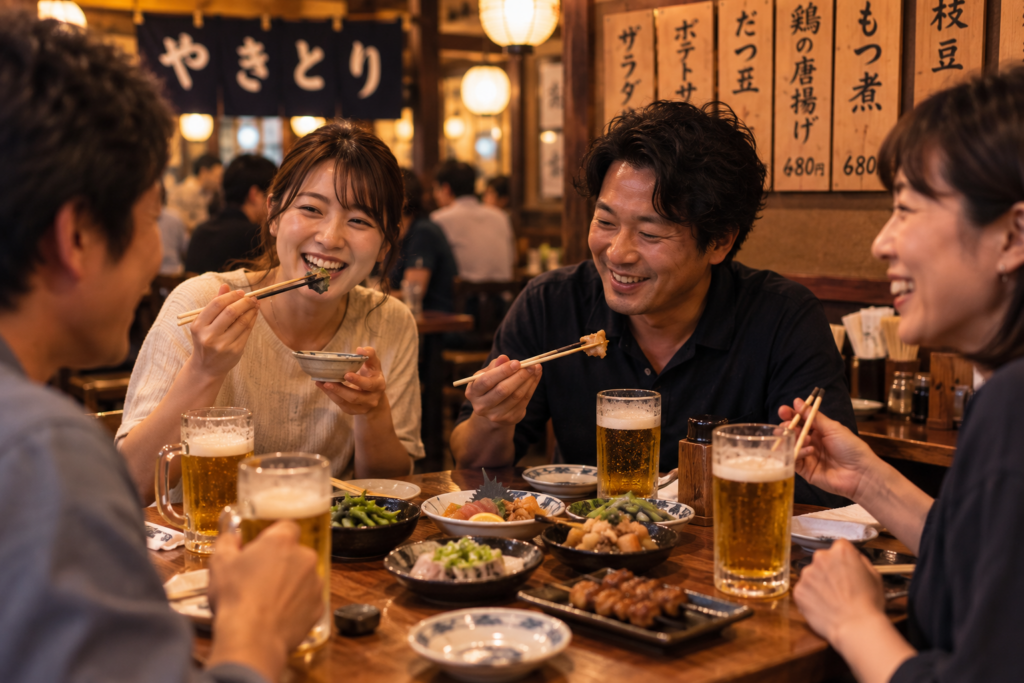
Can You Refuse Otoshi?
This is where simple internet explanations can become misleading.
You may see claims that otoshi can always be refused, or that you never have to pay if you do not eat it. Neither is a safe universal rule. Whether refusing the dish also removes the charge depends on the restaurant’s system and the circumstances.
Remarkably, this question has even reached Japan’s National Diet.
During a 2025 House of Representatives committee meeting, a lawmaker asked government officials when a contract involving otoshi is actually formed. The Ministry of Justice explained that there is no single answer for every situation. Depending on the circumstances, entering a restaurant while knowing about its otoshi system could be relevant to contract formation; in another situation, eating an otoshi after it is served could be regarded as acceptance.
The key point was that the legal assessment depends on the specific circumstances.
Travelers do not need to turn dinner into a contract-law seminar. The practical rule is much simpler:
If you do not want the otoshi or do not understand the charge, ask before eating it—ideally when you sit down.
Do not simply leave it untouched and assume the charge will automatically disappear.
Is Otoshi a Tourist Scam?
A normal otoshi charge is not, by itself, a tourist scam. It is an established restaurant custom used with Japanese customers as well as overseas visitors.
In the same 2025 Diet discussion, a government official described otoshi as a general custom at establishments such as izakaya and distinguished ordinary charges within socially expected ranges from hypothetical cases involving extraordinarily high charges.
That distinction matters.
Learning about otoshi should not make travelers assume that every unexplained restaurant charge must automatically be accepted. If the amount looks unusually high, the bill contains several charges you do not understand, or what you were told does not match what you are being charged, ask the staff before paying.
Understanding a local custom and asking what is on your bill are perfectly compatible.
What If You Have Allergies or Dietary Restrictions?
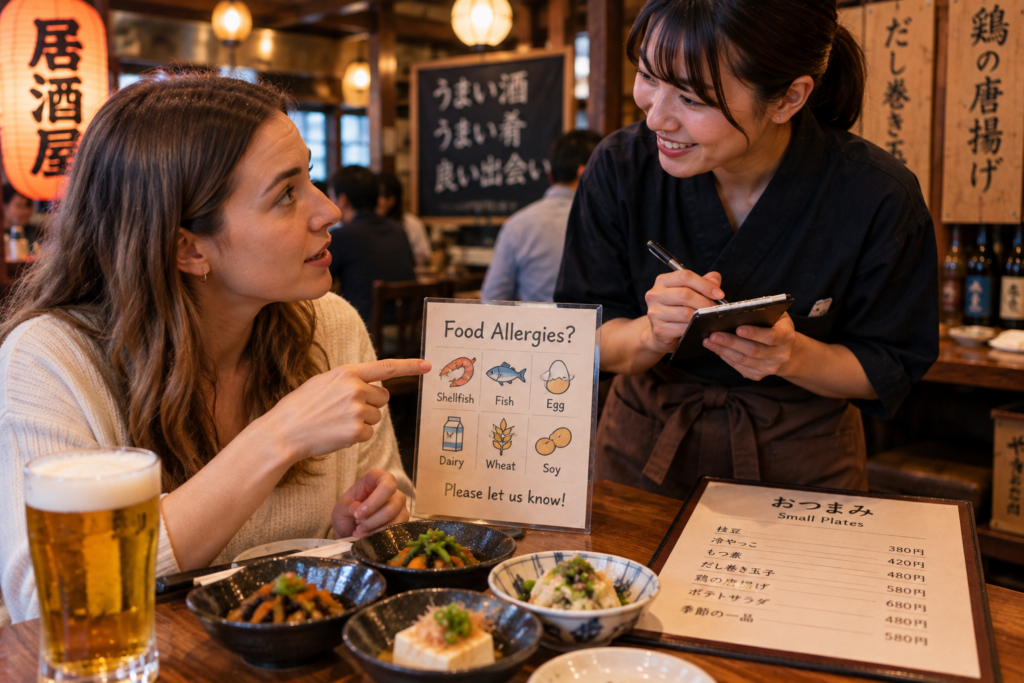
Because you do not choose your otoshi, you may not know exactly what is in it.
This matters for people with food allergies, vegetarians and vegans, and travelers who avoid certain ingredients for religious or other dietary reasons.
Japan’s National Consumer Affairs Center specifically advises overseas visitors to tell restaurant staff if an otoshi contains something they cannot eat because of vegetarian requirements, religious restrictions, or allergies.
Do not assume from appearance alone that a vegetable-looking dish contains no fish stock, meat products, or other ingredients you avoid. If dietary restrictions are important for you, tell the staff early.
A few useful questions are:
USEFUL QUESTIONS
- “Kore wa otoshi desu ka?” — Is this otoshi?
- “Otoshi wa ikura desu ka?” — How much is the otoshi?
- “Chāji wa arimasu ka?” — Is there a charge?
For a serious allergy, clearly explaining the specific allergen is more important than simply asking about otoshi.
Otoshi May Not Be as Ancient as It Looks
It is easy to encounter an unfamiliar Japanese custom and assume it must date back hundreds of years. Otoshi is more complicated.
Research referenced in Japan’s Collaborative Reference Database indicates that Edo-period izakaya did not automatically serve unordered otoshi in the modern sense. Exactly when today’s system emerged is uncertain.
Researcher Ryoichi Iino examined historical dictionaries and suggested that the modern otoshi system may have appeared around 1935. That is a hypothesis, not a settled origin date.
The interesting point is not that “otoshi began in 1935,” but that a custom that feels very traditional may be considerably newer than visitors assume.
How to Handle Otoshi on Your First Izakaya Visit
For most travelers, otoshi does not need to be a major concern.
If a small dish arrives that you did not order, consider that it may be otoshi rather than a mistake. Do not automatically assume it is free.
If you want to know the price, ask. If you do not want it, ask before eating whether it can be refused and whether the charge still applies. If you have allergies or dietary restrictions, tell the staff immediately.
And when the bill arrives, it is reasonable to ask about any charge you do not recognize.
That is better than either extreme: assuming an unexpected dish must be a scam, or assuming every charge must be correct simply because it is a Japanese custom.
The Rest of the Izakaya Experience
Otoshi is only one part of going to an izakaya.
Modern izakaya range from large chains with tablet ordering to tiny independent establishments with only a handful of counter seats. Ordering systems, menus, drinking customs, and charges vary accordingly.
You may hear the famous phrase “toriaezu nama” (“a draft beer for now”), encounter nomihodai all-you-can-drink plans, or order several dishes for the table to share. None of these is a mandatory ritual for every visitor.
You do not need to perform a checklist of “Japanese drinking rules” to enjoy an izakaya. Understanding otoshi simply removes one of the biggest surprises.
The Unexpected Charge Makes More Sense Once You Know the System
From a visitor’s perspective, the logic can initially sound backwards.
You did not choose the dish. You did not explicitly order it. You may not even know what it is until it arrives. And then you may be charged for it.
No wonder people ask questions.
From the perspective of a Japanese customer who has encountered otoshi for years, however, the same sequence can feel completely ordinary. I expect that an izakaya may serve one, I do not normally assume it is free, and the simplest way I would explain it is as something like a table charge that comes with a small dish.
Neither perspective is difficult to understand.
Otoshi makes much more sense once you know the system. And knowing the system also means knowing that prices and policies vary, that you can ask questions, and that an unfamiliar charge does not have to remain unexplained.
That may be the most useful thing to know before your first night at an izakaya in Japan.