If you grew up thinking of a bath as the place where you wash yourself, one Japanese habit can sound almost backwards: people often wash their bodies before getting into the bathtub.
Why wash before taking a bath?
Growing up in Japan, my answer would have been simple: because you want to keep the bathwater clean.
That makes much more sense once you understand one basic idea. In a Japanese home, washing and soaking are usually two different parts of bathing. Family members may also use the same tub of hot water one after another.
Once you understand that, many other details—from the washing area beside the tub to bath lids, reheating controls, and public-bath etiquette—start to make sense.
1. In Japan, Washing and Soaking Are Two Different Things
A typical Japanese bath follows a simple sequence:
Wash → Rinse → Soak
You wash your body and hair outside the bathtub, rinse off the soap and shampoo, and then get into the hot water.
For me, this never felt like a special rule that had to be memorized. When I was young, I bathed with my parents. They washed before getting into the tub, so I naturally did the same. If I still had soap or shampoo on me, I was told to rinse it off properly before getting in.
The distinction became automatic: the washing area was where you got clean; the bathtub was where you warmed up and relaxed.
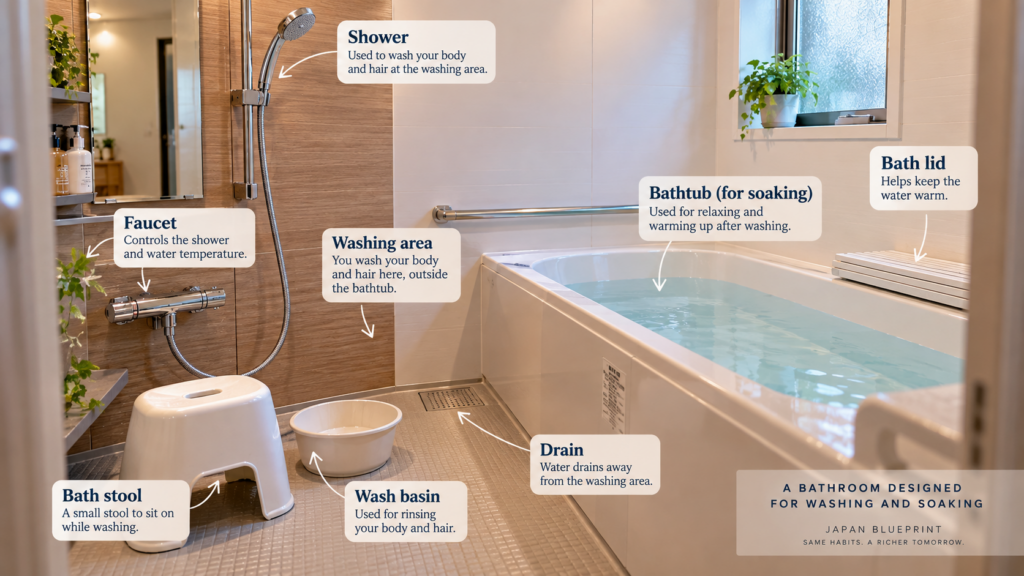
Many Japanese bathrooms are designed around that separation. The area outside the tub is meant to get wet, with a shower and drainage in the floor. You can wash thoroughly, rinse everything away, and only then step into the bath.
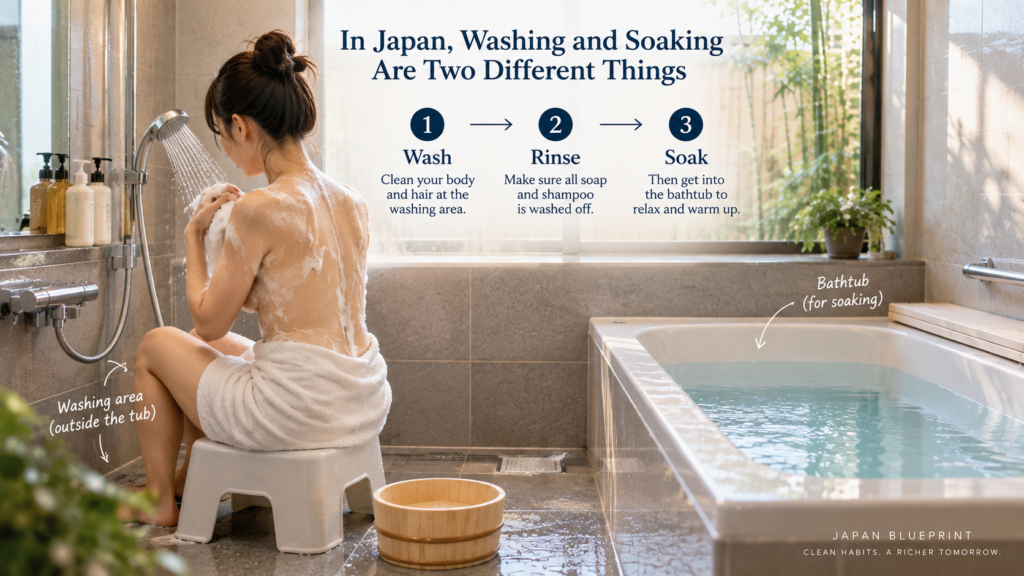
So although “taking a bath” can mean washing in the tub in some countries, the Japanese routine often separates washing and soaking very clearly.
2. The Real Reason: The Bathwater Is Shared
The next piece of the puzzle is the water itself.
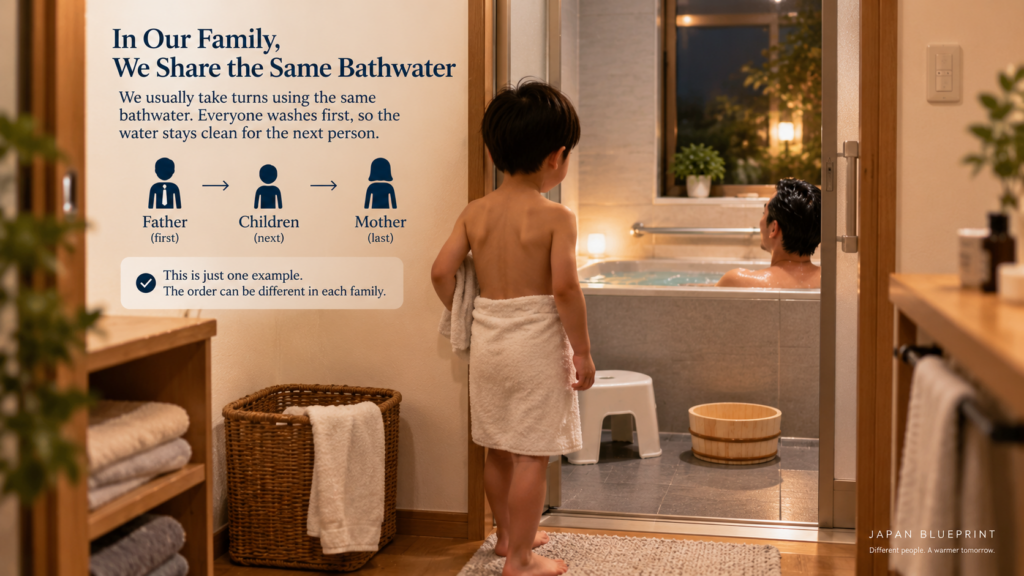
In many Japanese families, the tub is filled once and family members use the same hot water one after another. That does not mean everyone washes in the same water. Everyone gets clean first, then uses the tub for soaking.
That was completely normal in my family. We did not drain and refill the bathtub for each person.
On weekdays, whoever was ready would generally bathe first. On holidays, my father often went first, followed by the children and then my mother. That was simply how my family did it—not a rule for Japanese households in general.
The important part was that the water was shared.
If several people got into the same bathtub without washing first, I personally would not want to get into that water at all.
Seen that way, washing before bathing stops looking like a mysterious ritual. If someone is going to use the bathwater after you, keeping it clean is simply practical.
3. So What Is the Bathtub Actually For?
If you are already clean before you get into the bathtub, why get in at all?
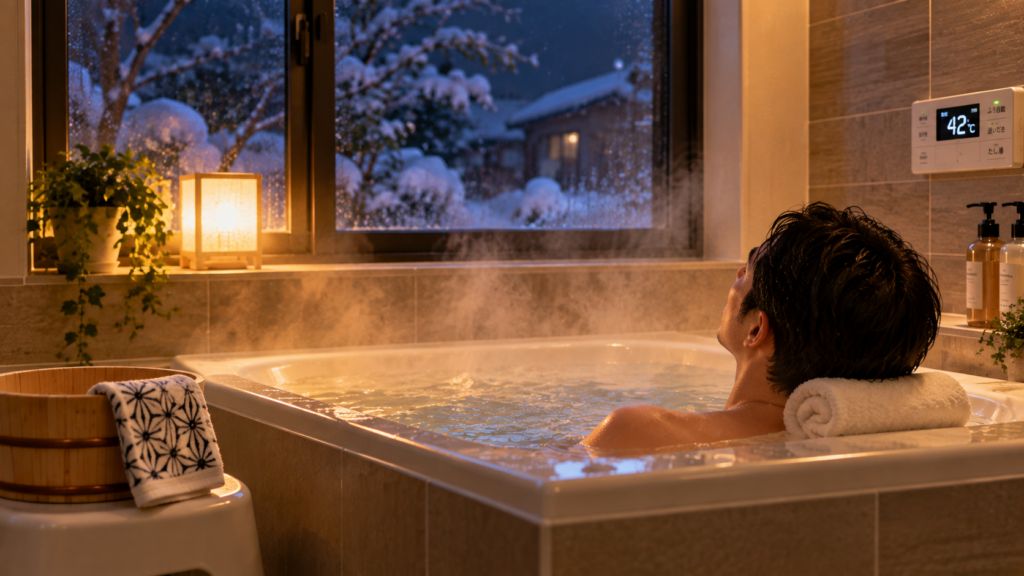
For many people in Japan, soaking has purposes beyond washing: warming the body, relaxing, and simply enjoying the hot water.
That is how I think about it too. When the weather is cold or I am tired, getting into the tub feels different from simply taking a shower. The shower gets me clean; soaking is the part that feels restorative.
This may also explain a small reaction I have had to bath scenes in Western movies. Seeing someone surrounded by bubbles never struck me as strange, but I have sometimes wondered whether all those bubbles would get in the way when you just wanted to soak.
It is a small difference, but it reveals something important. Two people can both say “bath” while imagining slightly different activities.
4. Do Japanese People Really Take a Bath Every Day?
Japan has a strong bathing culture, but that does not mean every Japanese person soaks in a bathtub every day.
A 2025 survey of 2,500 people in Japan aged 20 to 69 found that 42.1 percent soaked in a bathtub every day, while 21.0 percent said they did not soak at all and used only the shower. Other research has also found seasonal differences, with bathtub use increasing in colder weather.
My own habits fit that pattern.
Growing up, summer was mainly shower season, while I used the bathtub more often in winter. My habits today are similar. Even in winter, if I am busy, I may simply take a shower.
So the image of every Japanese person soaking in a hot bath every single night is too neat.
Japanese bath culture is real. Everyday life is more flexible.
5. Why Japanese Bathrooms Are Built Differently
Once washing and soaking are separated, the layout of a Japanese bathroom becomes easier to understand.
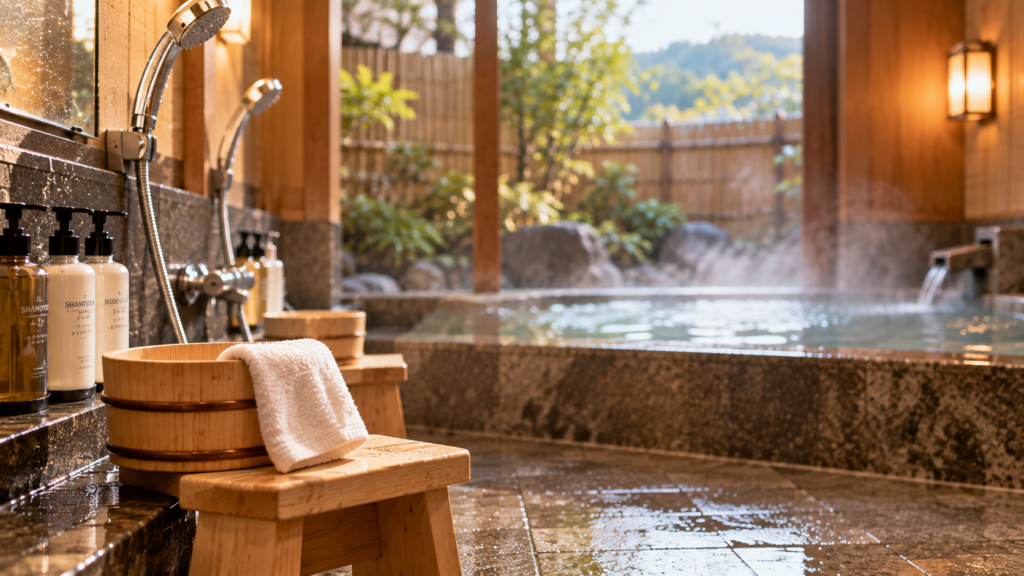
Instead of using the bathtub as the main place to wash, many Japanese bathrooms have a dedicated washing area beside it. Common items include a handheld shower, a low bath stool, a washbasin or bucket, and a bath lid. The floor is designed to handle water and drain it away.
When I was a child, the bath stool, basin, and bath lid did not seem like distinctive pieces of Japanese culture. They were simply things you expected to find in a bathroom.
The bathtub is also often relatively deep, making it well suited to sitting and soaking.
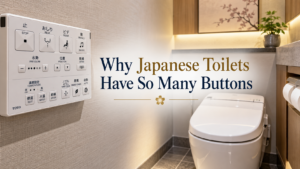
6. Why Japanese Baths Have So Many Controls
Japanese bathroom controls can look surprisingly elaborate to visitors.
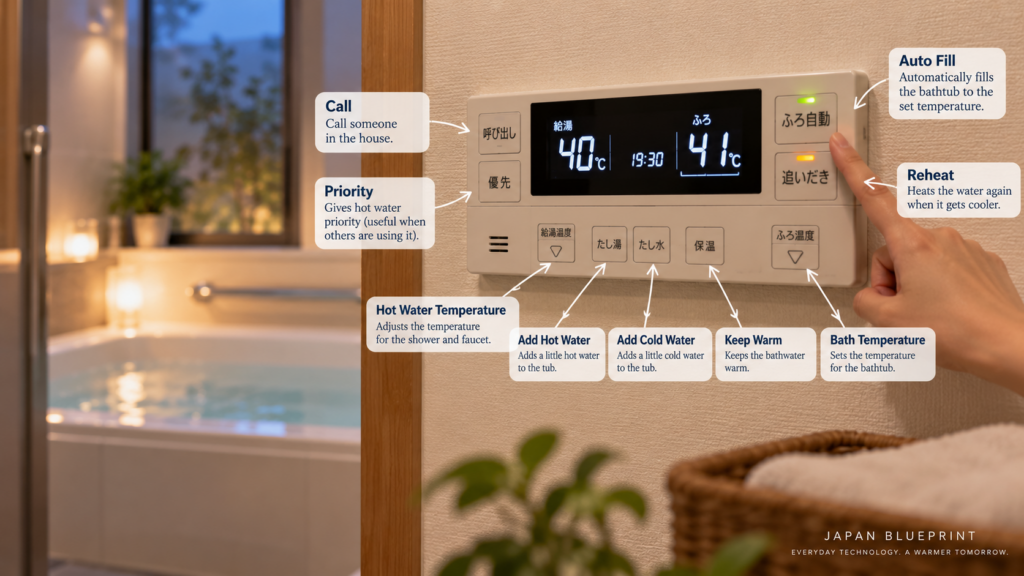
Depending on the home, a bath system may automatically fill the tub to a selected temperature and level, announce when it is ready, or reheat water that has cooled.
But these features do not necessarily feel futuristic to the people using them.
The home I grew up in had a reheating function. My current home has automatic bath filling, although it does not have reheating or heat-retention functions. To me, these systems feel more like normal modern household equipment than exotic technology.
Their usefulness is easy to understand if family members are going to soak at different times. Keeping or restoring the water to a comfortable temperature is convenient, while a bath lid helps slow heat loss.
7. What About Onsen and Sento?
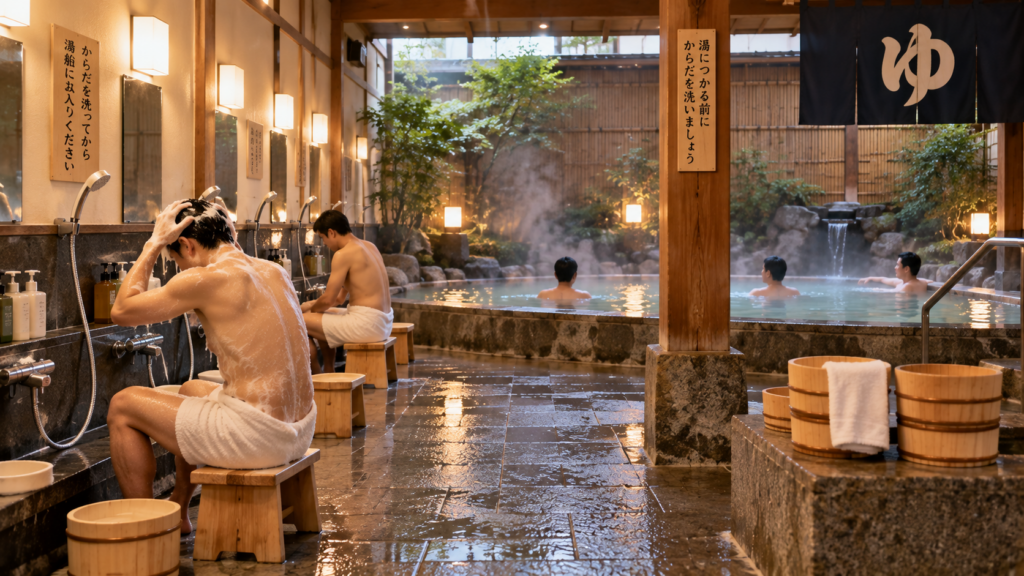
The same basic idea helps explain etiquette at onsen (hot springs), sento (public bathhouses), and other shared bathing facilities, although individual facilities may have their own instructions.
The communal tub is not the place to wash yourself.
Japanese tourism and public-health guidance commonly tells bathers to clean or rinse their bodies before entering shared bathwater. Towels should not go into the tub, long hair should be kept out of the water, and washing takes place outside the communal bath.
At some facilities, you may also see people perform kake-yu—pouring hot water over the body before entering. Exact routines can vary, so follow the instructions at the facility you are visiting.
For me, washing before entering a public bath feels like basic etiquette. If someone went straight into the shared water without washing or rinsing first, I would notice, and it would bother me quite a lot.
8. A Few Bath Habits That Make More Sense Now
Once you understand the basic system, several smaller bath habits become easier to explain.
Some Japanese households reuse leftover bathwater for laundry, mainly as a way to reduce water use. It is far from universal: a 2023 Weathernews survey found that 19.6 percent of respondents did it often and another 9.8 percent occasionally.
I have done it occasionally both in the past and today. Personally, I have always thought of it mainly as saving water rather than thinking deeply about whether the bathwater was “clean enough.”
Bath additives are another familiar part of the experience. Powders, tablets, salts, and scented products can make soaking feel like a small treat. I used them growing up and still do, especially when the weather turns cold.
And at sento and super sento, the familiar post-bath bottle of milk or coffee milk is still part of the experience for some people—including me on occasion.
These details are not universal traditions. They simply show how bathing in Japan can be more than a hygiene routine.
9. The One Idea That Explains Japanese Bath Culture
So why do Japanese people wash before they bathe?
Because washing and soaking are usually two different things.
Wash first. Rinse. Keep the water clean. Then soak and relax.
That simple distinction helps explain why family members can share bathwater, why Japanese bathrooms have separate washing areas, why reheating and bath lids are useful, and why similar rules appear at onsen and sento.
Not every Japanese household follows exactly the same routine, and not everyone uses a bathtub every day.
But for me, a bath has never been only about removing dirt. It is a place to get clean, warm up, relax, refresh myself, and come out feeling reset in both body and mind.
Once you see the bathtub that way, washing before getting into it no longer seems backwards.
It is what makes the bath work.