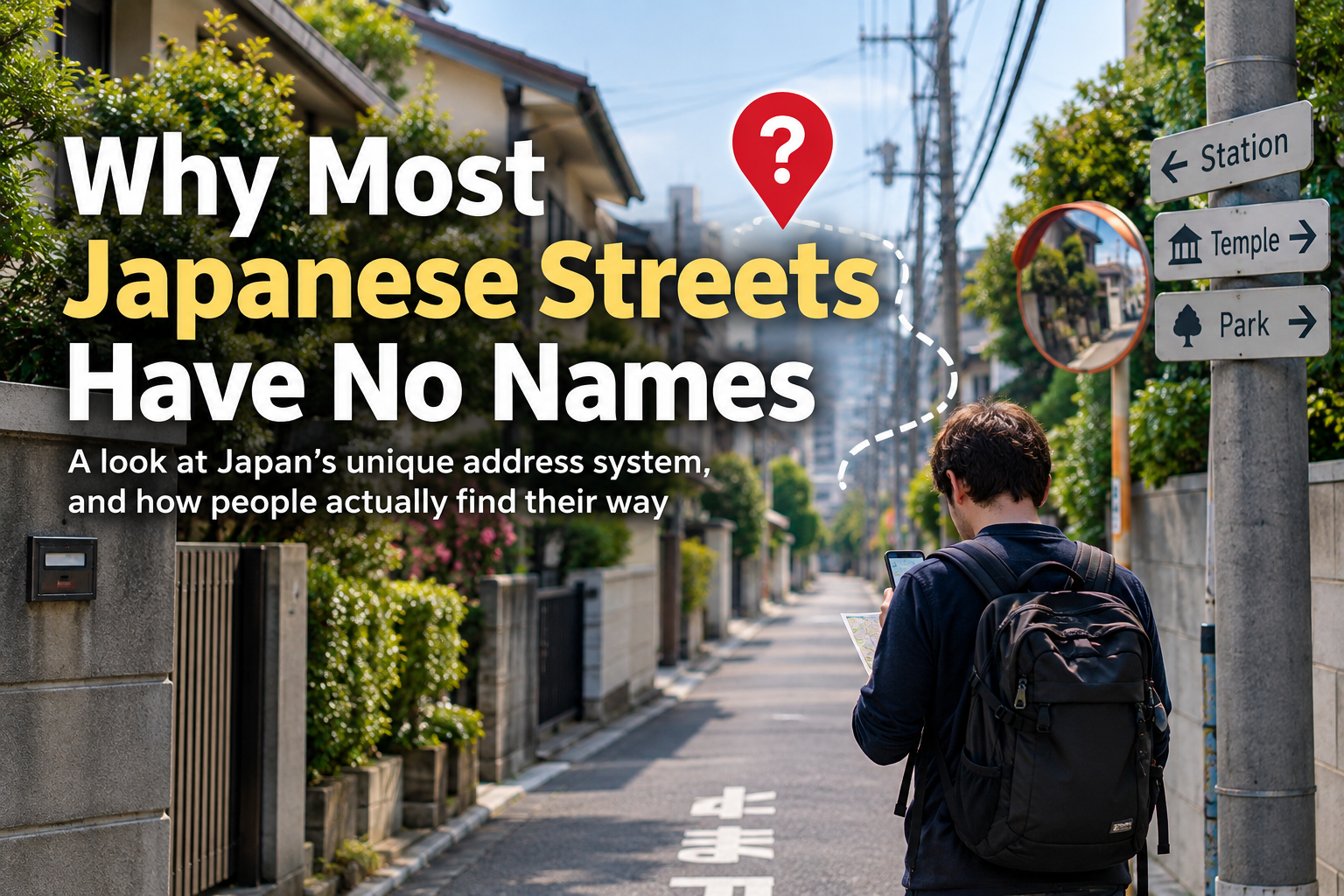
I once spent about 20 minutes trying to find a building in Japan.
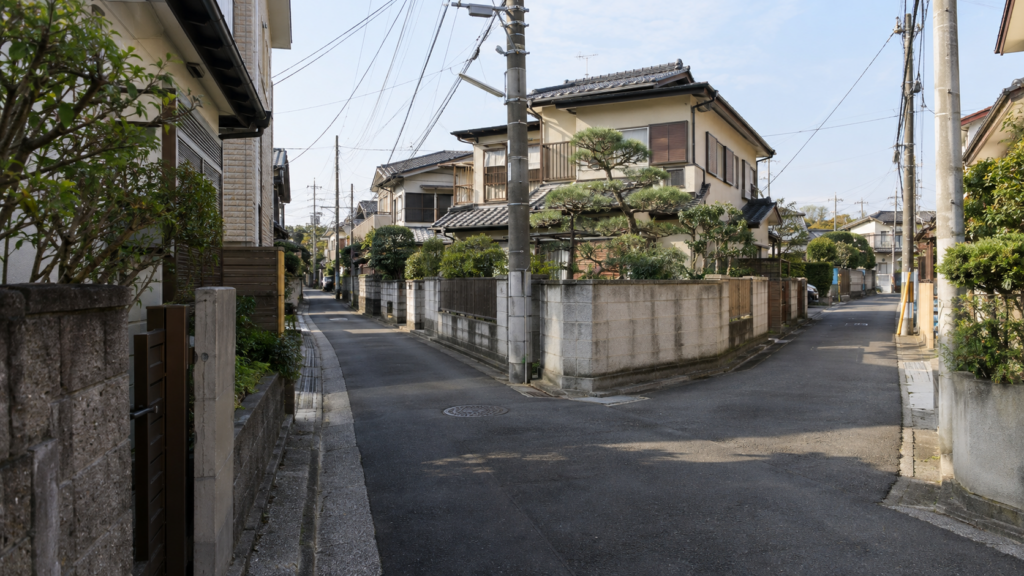
This happened before smartphone navigation apps became widespread. I was traveling to a facility for work, located just off a main road. I took the wrong turn into a smaller street, where there was no useful street-name sign or obvious landmark to guide me.
As the minutes passed, I became increasingly worried that I wouldn’t arrive on time. Eventually, I asked someone passing by for directions and managed to find the building. I still remember the relief I felt.
I’m Japanese, but that didn’t stop me from getting lost in my own country.
The short answer: Most Japanese addresses identify neighborhoods, blocks, or land parcels rather than buildings along named streets. That makes the system quite different from the street-name-based addresses familiar to many international visitors.
But there’s another part of the story. Navigation apps have made getting around Japan much easier, yet even today, entering the correct address doesn’t always take me to the correct building.
1. How Japanese Addresses Work Without Street Names
In countries such as the United States and the United Kingdom, a street name is usually central to an address.
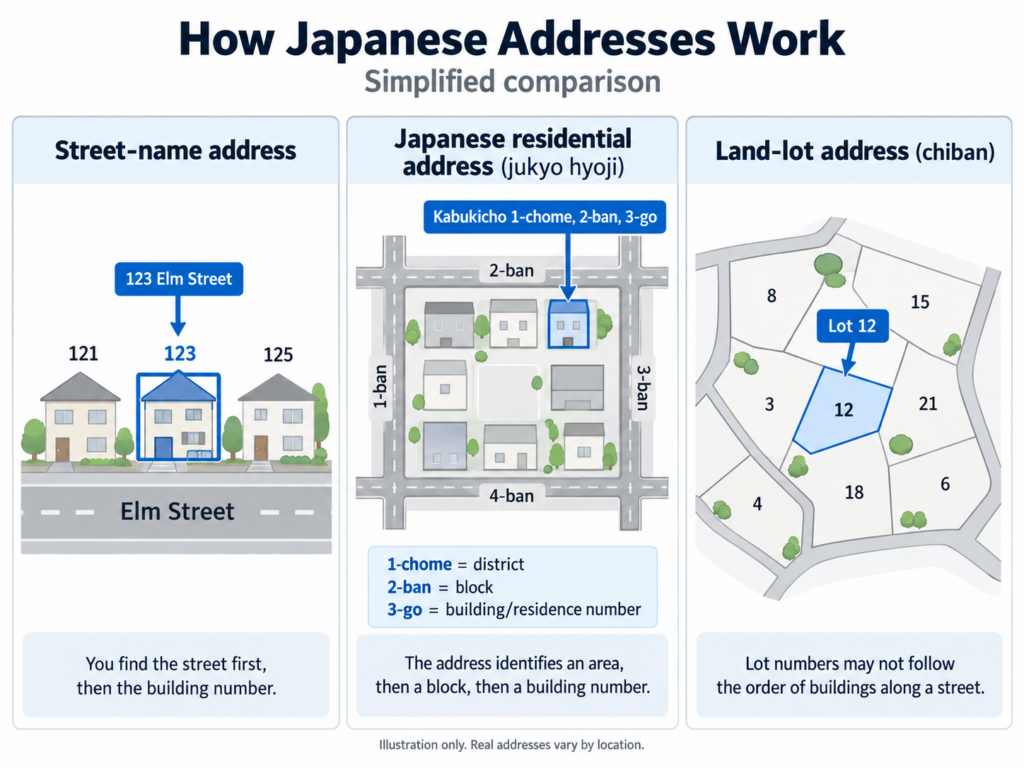
Consider a fictional address like 123 Elm Street. You find Elm Street and then look for building number 123.
Japan generally uses a different approach.
A simplified Japanese address might look like this:
Tokyo-to, Shinjuku-ku, Kabukicho 1-2-3
In an area using the common block-based residential addressing system, the components would mean:
- Tokyo-to: Tokyo Metropolis
- Shinjuku-ku: Shinjuku Ward
- Kabukicho: The neighborhood
- 1-chome: A numbered subdivision of the neighborhood
- 2-ban: A block number
- 3-go: A residence number
The address moves from a larger administrative area to a smaller location, without necessarily mentioning a street.
This example illustrates one common format, not a universal rule. Japanese addresses may look similar even when the numbers are assigned under different systems.
Residential Addresses and Land-Lot Numbers
Two Japanese terms help explain the distinction.
Jukyo hyoji (住居表示) refers to Japan’s formal residential addressing system. Under its widely used block-based method, an address includes a block number and a residence number.
A block is generally defined by roads, railways, rivers, or other boundaries. Residence numbers are commonly assigned according to numbered sections around the block, with the section associated with the building’s entrance helping determine its number. There are exceptions to this general process.
Chiban (地番), on the other hand, refers to land-lot numbers used in land registration.
In areas that have not adopted formal residential addressing, addresses may rely on these land-lot numbers. Their numbering does not necessarily follow the sequence of buildings along a street.
The two systems can produce addresses with similar-looking numbers, although those numbers represent different things.
Japan’s Digital Agency has identified the difficulty of coordinating address and location data managed under separate administrative frameworks, including residential addressing and real estate registration.
Understanding these distinctions helps explain why Japanese addresses do not always behave as a visitor expects.
2. Why Finding the Right Building Can Still Be Difficult
I work as a visiting massage therapist in Japan. Traveling to unfamiliar homes is a regular part of my job, and it has made me pay much closer attention to how addresses work in practice.
My professional background also includes work in orthopedic clinics and elderly care facilities. I’ve written more about that work in Massage in Japan: Shiatsu, Seitai, and How to Choose a Licensed Therapist.
One thing I’ve learned from visiting people at home is that reaching the correct neighborhood and identifying the correct building are not always the same thing.
Sometimes, address numbers seem to jump unexpectedly. Nearby buildings do not necessarily have consecutive numbers, and trying to predict the next address from the previous one may not help.
I’ve also encountered cases where a numbered location shown on a map did not match where the actual building stood.
The precise reason isn’t always clear. It could involve inaccurate map information or differences in how a location has been recorded. I can’t attribute every discrepancy to Japan’s address system.
From the perspective of someone trying to reach an appointment, though, the problem is immediate: the information on the map doesn’t match the buildings in front of you.
On some occasions, I’ve called the person I was visiting or another contact for directions. They might explain where to turn or describe a nearby building that would help me recognize the location.
That can be much more useful than staring at the same address again.
3. From Asking for Directions to Using Google Maps
Finding unfamiliar addresses has changed considerably since the day I spent 20 minutes searching for that facility.
Today, I use navigation apps for work. Before heading somewhere unfamiliar, I check the general location, examine the route, and sometimes use Street View to see what the surrounding roads and buildings look like.
Visual clues can be particularly helpful. Recognizing a nearby building or intersection can confirm that I’m approaching the right destination.
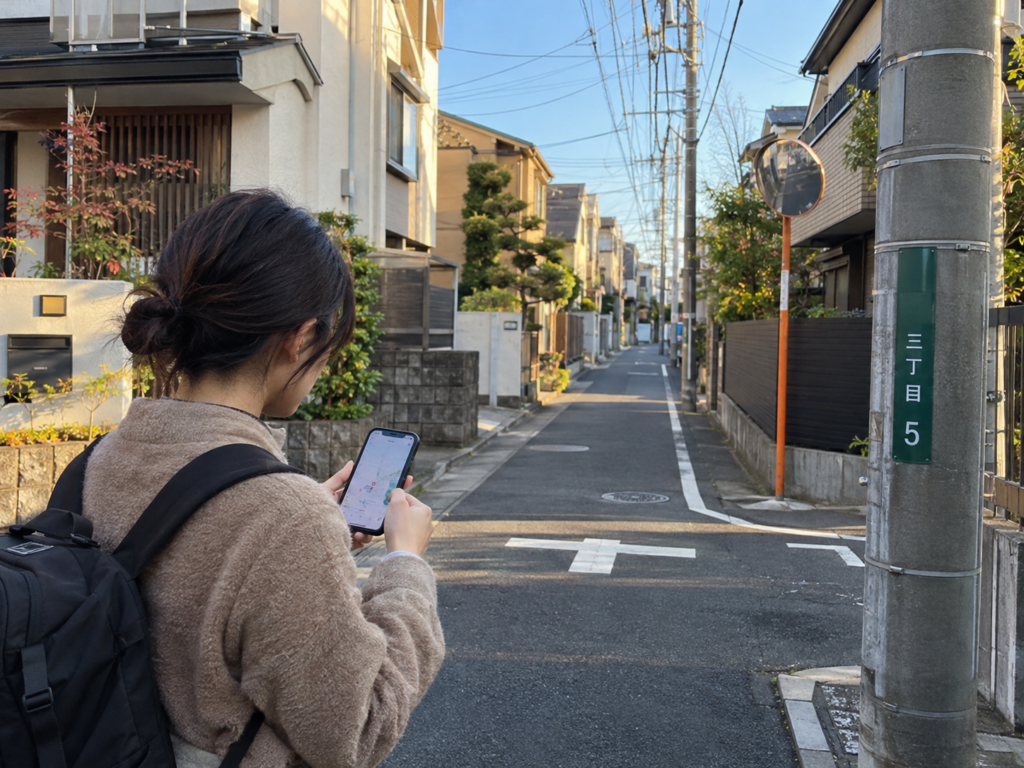
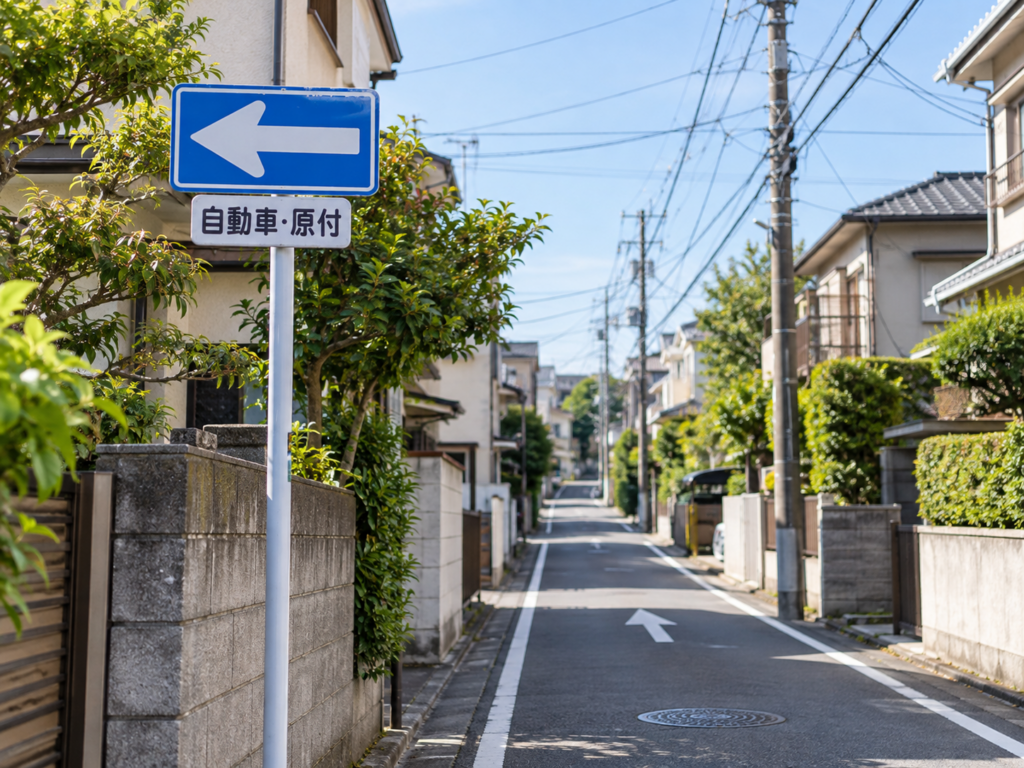
I travel by motorcycle, so I also check for one-way streets. A route that appears straightforward on a map may require a different approach when certain turns aren’t permitted.
These preparations save time, but they don’t eliminate every problem.
When the Map Pin Doesn’t Match the Building
Even today, I sometimes enter an address into Google Maps or another navigation app and find that the displayed location doesn’t match where the building actually stands.
The difference varies considerably.
Sometimes the map points to a building a few doors away. Sometimes it indicates a building behind the actual destination, or another location within the same block. On other occasions, the displayed location has been much farther away.
When that happens, I compare the map with the buildings, roads, and landmarks around me. If I still can’t identify the destination, I ask for clarification.
This problem isn’t unique to Japan. Navigation apps can show incorrect address locations in other countries, including places where streets have names and buildings are numbered along them.
A misplaced pin may reflect inaccuracies or limitations in the underlying map data. It doesn’t automatically mean the address itself is wrong.
Google Maps even has an official process for reporting an incorrect address or pin location.
Japan’s address conventions may be unfamiliar to international visitors, but it would be misleading to blame every navigation error on the absence of street names.
For me, a map is an extremely useful starting point. It isn’t a substitute for confirming what’s actually in front of me.
4. Does Japan Really Have No Named Streets?
Despite the title, Japan certainly has named streets and roads.
Major avenues, shopping streets, highways, and historic routes often have recognizable names. The difference is that ordinary Japanese addresses generally don’t depend on those road names.
There is also a legal distinction worth knowing.
Japan’s Residential Addressing Act provides for two approaches to formal residential addressing:
- Block-based method: Uses numbered blocks and residence numbers.
- Road-based method: Uses road names and building numbers.
The block-based method is widely adopted in Japan. The road-based method is much less common.
The Ministry of Land, Infrastructure, Transport and Tourism gives parts of Higashine City in Yamagata Prefecture as an example of the road-based approach.
Its published example is:
Yamagata Prefecture, Higashine City, Itagaki-odori 10
Here, the road name and building number are part of the address.
This is an important distinction: Japan doesn’t simply prohibit or lack street-based addresses. It has different legally recognized methods, and one is far more common than the other.
Kyoto: Street Names in Everyday Directions
Kyoto offers another interesting variation.
Central Kyoto has a historic grid of streets, and traditional descriptions of locations often refer to street names and directions.
You may encounter expressions such as agaru (north), sagaru (south), higashi-iru (east), and nishi-iru (west), which help describe a location relative to a street or intersection.
These conventions can be useful when finding places in central Kyoto, although they don’t mean every Kyoto address follows a Western-style street-number system.
Sapporo: A Grid That Helps People Navigate
Central Sapporo also has a comparatively regular grid, with north, south, east, and west appearing in many local area names.
This layout can make it easier to visualize where a destination is located.
But a city having a grid of streets is not the same as using road names and sequential building numbers as its formal addressing method.
Kyoto, Sapporo, and Higashine illustrate different aspects of Japanese streets and addresses. They shouldn’t be treated as interchangeable examples.
What About Japan’s Old Castle Towns?
Some older Japanese neighborhoods reflect the layouts of former castle towns, including narrow streets, bends, and irregular routes.
However, the country’s modern addressing practices cannot be explained simply by saying that samurai deliberately made streets confusing.
Street layouts developed for many historical reasons, while address administration evolved through separate systems and reforms.
Both can influence the experience of finding a place, but they are not the same thing.
5. How to Find Your Way Around Japan
For most tourists, Japan’s address system is less intimidating in practice than it may appear on paper.
If you’re visiting a major station, hotel, museum, or popular restaurant, searching by its name in a navigation app will often be enough.
The challenge is more likely to arise when you’re looking for a small business, an unfamiliar private building, or a location tucked away in a residential neighborhood.
Based on my experience traveling to unfamiliar addresses, here are a few habits worth adopting:
Search by the building or business name. A place name can be easier to locate accurately than an address entered on its own.
Check the surrounding landmarks. Nearby shops, recognizable buildings, and intersections can help you confirm the location.
Look at the entrance, not just the map pin. Even when a building is correctly identified, its entrance may not be where you expect.
Check the route if you’re driving or riding. One-way streets and access restrictions can affect the final approach.
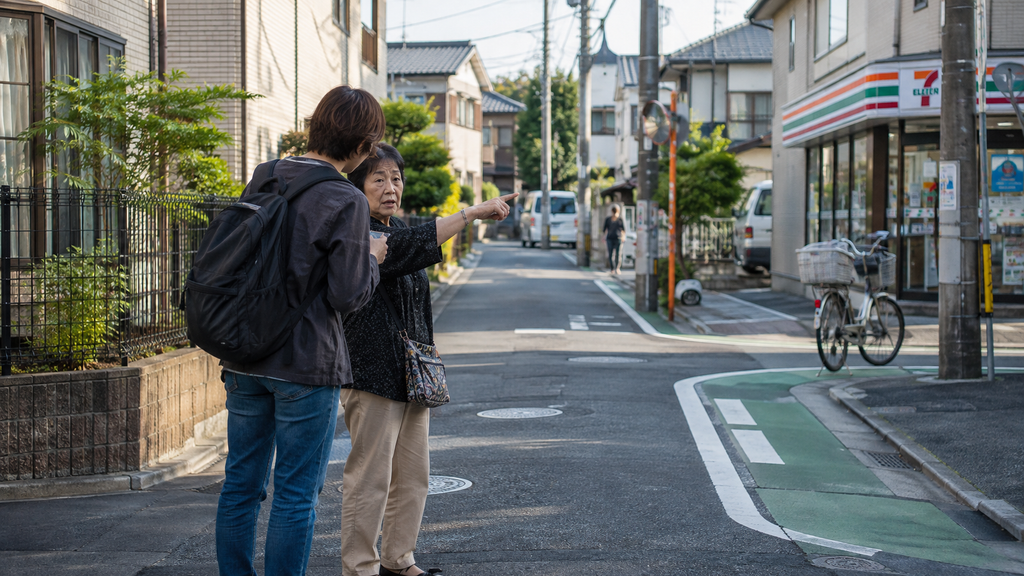
Ask for directions when something doesn’t match. Calling the destination or checking with someone nearby may be faster than repeatedly following an uncertain map pin.
At a large railway station, agreeing on a specific exit or landmark is also more useful than simply arranging to meet “at the station.”
None of these precautions is exclusive to Japan. They’re sensible ways to navigate unfamiliar places anywhere, but they’re especially useful when the local address system doesn’t work the way you’re accustomed to.
6. Why Even Japanese People Sometimes Get Lost
Japan’s addresses may look unusual if you’re accustomed to streets with names and buildings numbered along them.
Yet most everyday journeys are straightforward with modern maps and a little local information. The difficult part is sometimes identifying a particular building after you’ve reached the right neighborhood.
I’ve experienced that both before and after smartphone navigation became common.
So if your map says you’ve arrived but the building you’re looking for isn’t there, check the surroundings before assuming you’ve misunderstood Japan’s address system.
Sometimes the most useful clue isn’t another number. It’s a nearby landmark, the correct entrance, or a quick conversation with someone who knows the area.
Sources and Further Reading
- Digital Agency — Address Base Registry
- Geospatial Information Authority of Japan — Residential Address Information (Japanese)
- Ministry of Land, Infrastructure, Transport and Tourism — Japanese Addressing Methods (Japanese)
- Residential Addressing Act — e-Gov Laws (Japanese)
- Google Maps Help — Fix a Missing Address or Wrong Pin Location
The personal experiences described in this article are based on the author’s work traveling to unfamiliar destinations in Japan. Identifying details about clients and workplaces have been omitted.