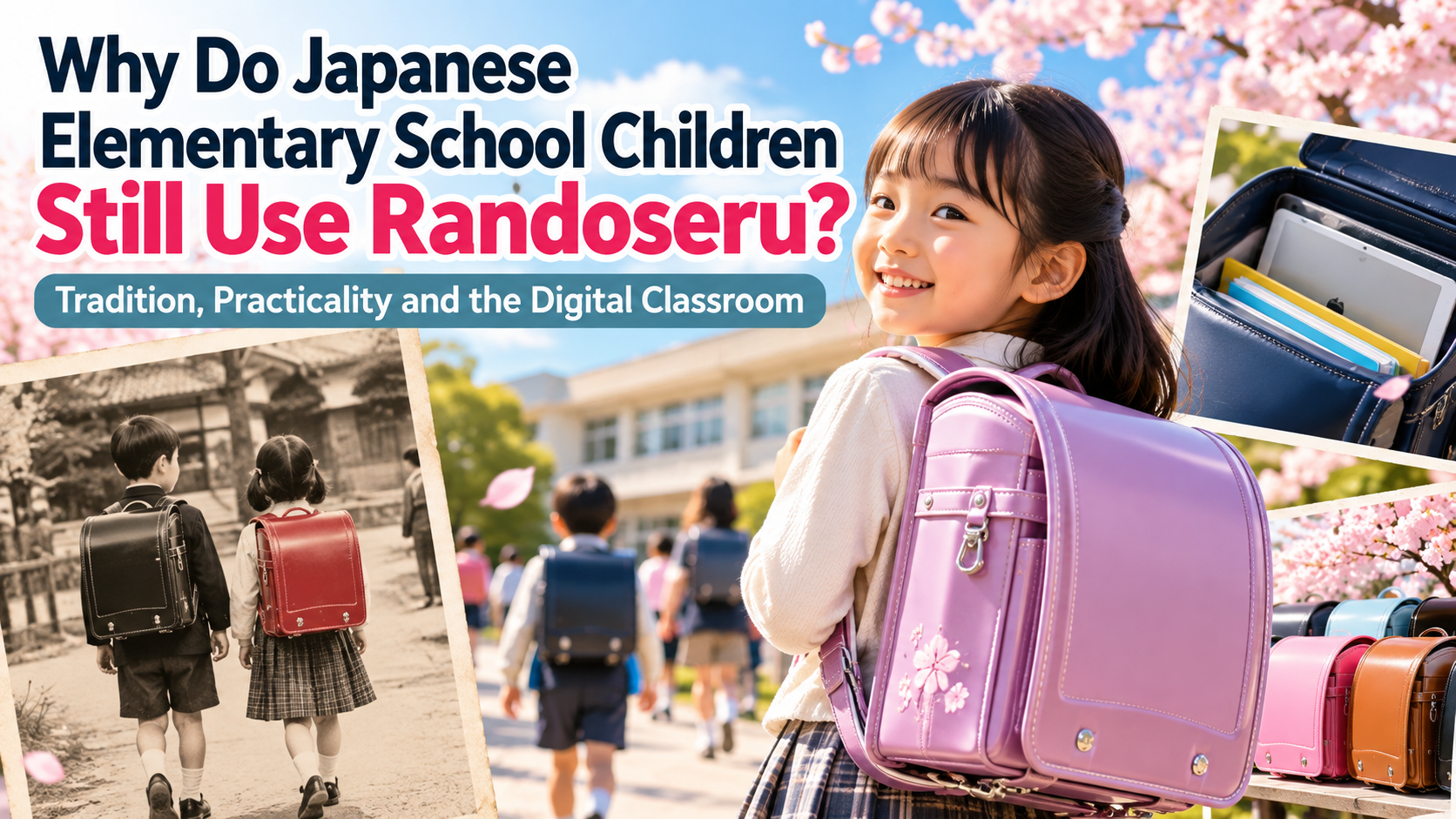
Walk past an elementary school in Japan in the morning and you will probably see the same familiar shape again and again: a boxy backpack with a large flap over the back.
It is the randoseru, the school bag most closely associated with Japanese elementary school children.
Randoseru are sturdy, often expensive, and expected to last for years. They are also not required by any nationwide rule. Depending on the school, children may be allowed to use an ordinary backpack instead.
So if a lighter and cheaper backpack can do the same basic job, why do so many Japanese families still choose a randoseru?
Part of the answer is practical. Part of it is tradition. And part of it is simply that, for generations of Japanese children, carrying a randoseru has been a normal part of starting elementary school.
That normality is becoming more interesting as classrooms change. Japanese children now use tablets and other digital tools alongside printed materials, while some schools and municipalities are reconsidering how much children should carry in the first place.
So what happens to the randoseru when the things inside it change?
Randoseru: Quick Facts
- Used by: Mainly Japanese elementary school students
- Typical period of use: Grades 1–6
- Average purchase price in 2026: ¥62,034
- Mandatory nationwide?: No
- Traditional colors: Black for boys, red for girls
- Today: Many colors, materials, and lightweight designs
- Modern school use: Models are available for A4 materials and tablets
What Is a Randoseru—and Is It Actually Required?
A randoseru is a structured backpack traditionally used by Japanese elementary school children. Its familiar design has a firm rectangular body, two shoulder straps, and a large flap covering the main compartment.
The name comes from the Dutch word ransel, meaning a backpack or knapsack. The history of the randoseru in Japan goes back to the nineteenth century, when Western-style military backpacks were introduced. The box-shaped school bag recognizable today developed later and gradually became associated with elementary school.
For much of the twentieth century, the color choice was far narrower than it is today.
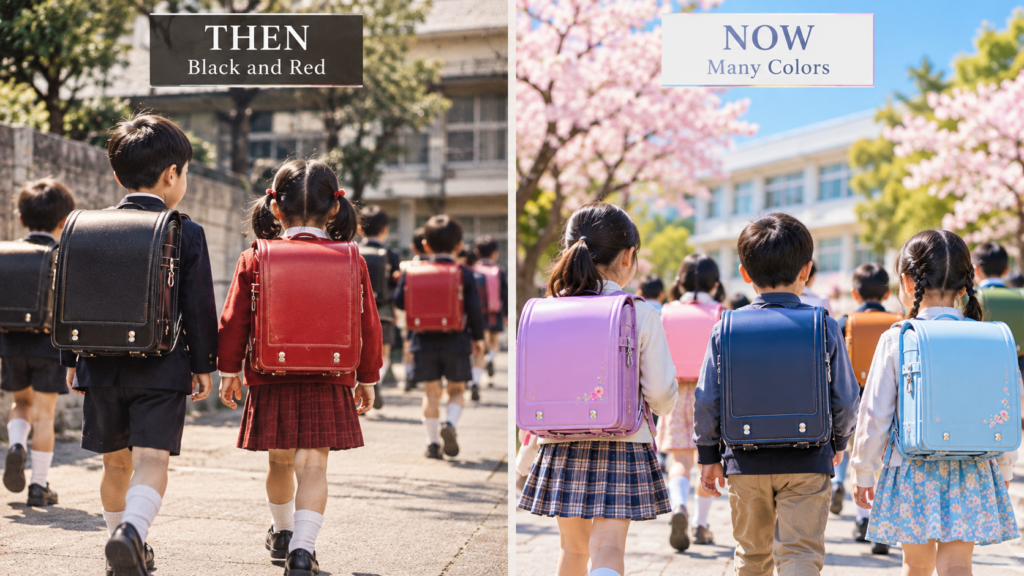
When I was in elementary school, boys carried black randoseru and girls carried red ones. Mine was black.
I do not remember choosing the color or design myself. There was not much to choose from. I also cannot remember seeing classmates come to school with ordinary backpacks. Children sometimes carried an extra bag for gym clothes, uwabaki, or other supplies, but the randoseru itself was taken for granted.
That does not mean every Japanese school requires one.
There is no nationwide rule saying that elementary school children must use a randoseru. Policies vary between schools and municipalities, and some local governments explicitly state that other bags can be used.
Even so, randoseru remain extremely common. In a 2026 survey of 725 elementary school children conducted among CoroCoro Comic readers and their families, 94.6% said they used a randoseru as their main school bag.
That figure should not be treated as a nationwide usage rate because the survey covered a specific group of respondents. But it gives a sense of how familiar the randoseru remains in Japanese elementary school life.
Why Are Randoseru So Expensive?
Price is one of the first things that surprises people when they start looking at randoseru.
According to a 2026 survey by the Randoseru Manufacturers Association, the average purchase price was ¥62,034.
For a child’s backpack, that sounds expensive. But randoseru are generally bought with a very different expectation from an ordinary school bag: the same one is supposed to make it through all six years of elementary school.
The rigid construction helps protect books and keeps the bag from losing its shape. Depending on the model, manufacturers also focus on water resistance, reinforced construction, shoulder comfort, weight distribution, and lighter materials. Major manufacturers commonly offer repair warranties covering the elementary school years, although the details vary by brand.
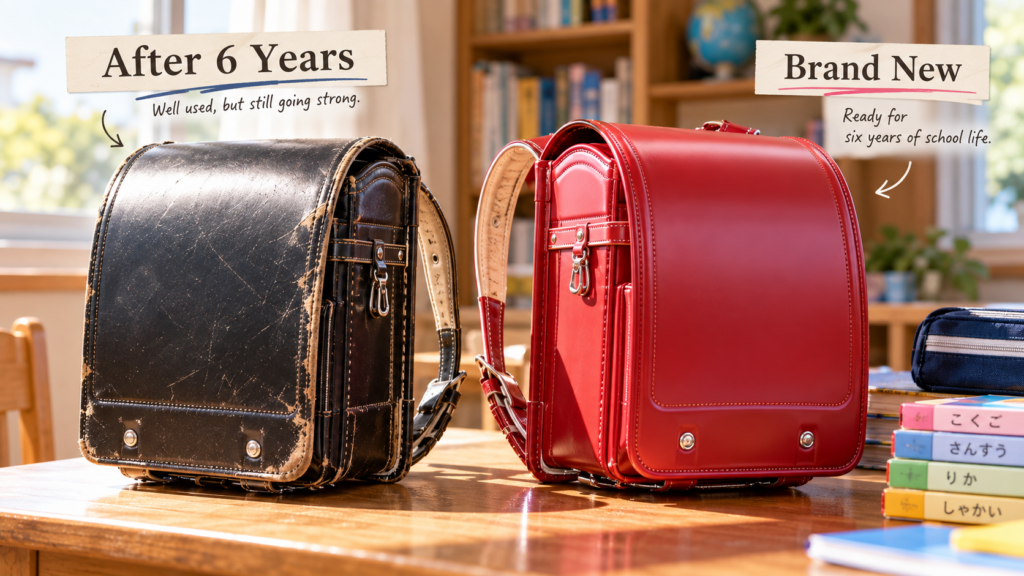
My own randoseru lasted all six years.
As far as I can remember, my classmates kept theirs for six years too. We certainly did not treat them like expensive leather goods. Mine was used every school day, stuffed with whatever I needed, and handled the way a child normally handles a school bag.
It survived.
That durability changes how I look at today’s prices. Around ¥60,000 is not cheap, but if the bag really lasts six years, I would not automatically consider it unreasonably expensive either.
There is another side to the purchase that is harder to measure in terms of specifications.
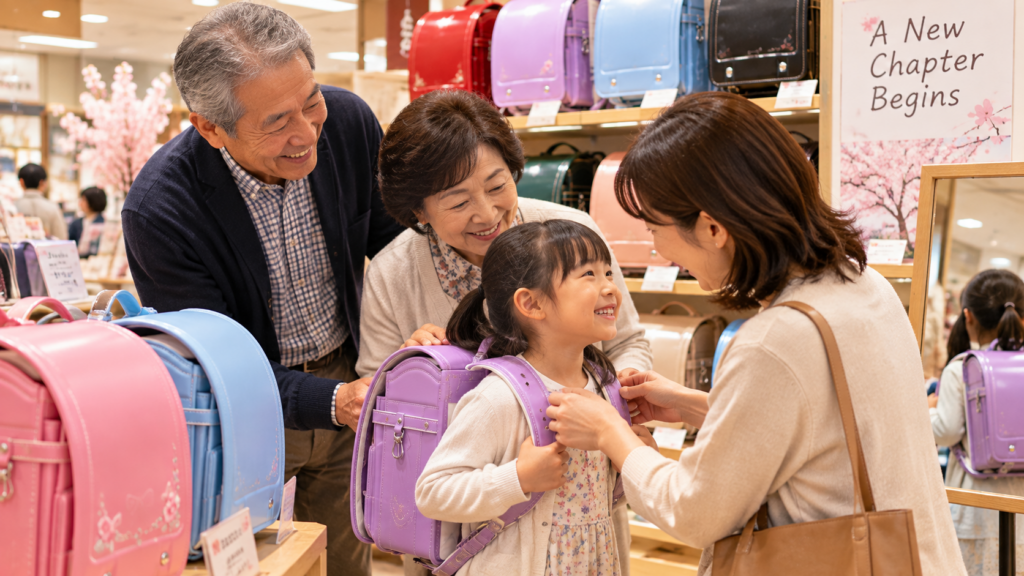
A randoseru is often bought as part of preparing for elementary school, sometimes as a gift from grandparents. I believe my grandmother bought mine, although I have no memory of how much it cost.
Today, families may start comparing brands, materials, colors, and designs months before enrollment. The process has even acquired its own nickname, rankatsu—a term for the activity surrounding the search for and purchase of a randoseru.
Families are therefore not always approaching the purchase as if they were simply choosing a container for textbooks. For some, it is also one of the objects that marks a child’s transition into elementary school.
Randoseru Were Heavy Before Tablets, Too
The weight of Japanese school bags has received plenty of attention in recent years, particularly as children have started carrying digital devices.
But I remember my randoseru being heavy long before tablets appeared in classrooms.
At my elementary school, leaving textbooks at school—commonly called okiben—was not allowed. We took our books home.
Some days were worse than others. If I also had gym clothes or uwabaki, the indoor shoes used at Japanese schools, there was even more to carry. I often tried to fit as much as I could inside the randoseru.
I remember the weight clearly.
By the upper grades, I sometimes felt that the bag was bulky or a little small for everything I wanted to put into it. What I do not remember thinking was that I had outgrown it because it looked childish.
It was just my school bag.
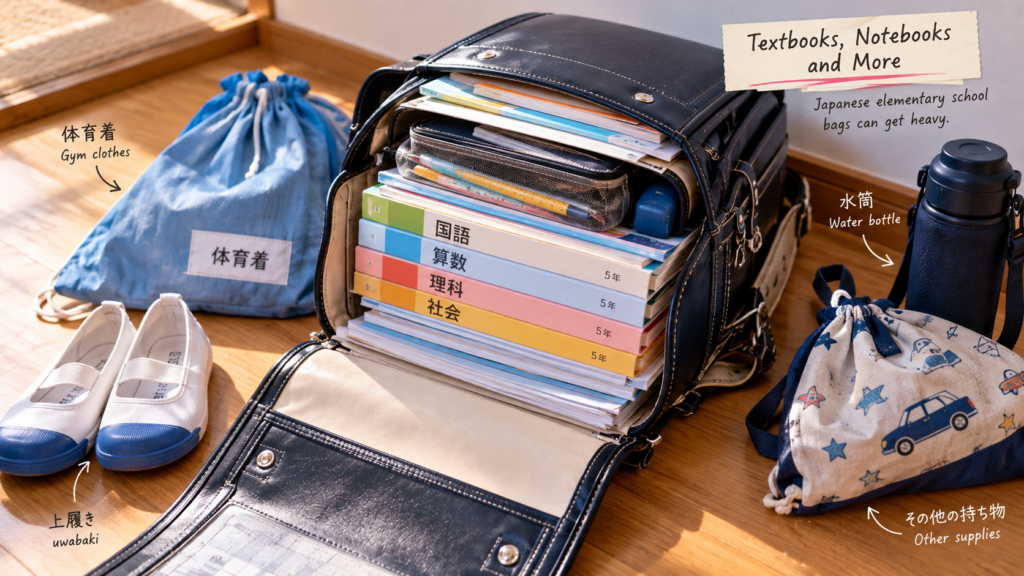
That is worth remembering when discussing today’s problem of heavy school bags. Tablets may add weight, but they did not create the problem. Japanese elementary school children were carrying heavy loads decades ago.
What has changed is the mix of things inside the bag.
Tablets Changed What Goes Inside—But the Randoseru Still Looks Familiar
Japanese schools now use tablets, Chromebooks, and digital learning materials much more extensively than they did in the past. Digital textbooks are also being introduced progressively.
Paper textbooks, however, have not simply disappeared. Japan’s Ministry of Education currently assumes that digital textbooks will be used alongside paper textbooks for the time being.
For some students, that means a digital device is not always replacing everything that used to be carried. It may be travelling alongside notebooks, printed materials, and other school supplies.
Digitalization, in other words, does not automatically produce a lighter walk to school.
The bags themselves have changed in response.
Modern randoseru can accommodate A4 flat files and digital devices, and manufacturers now sell models that put considerable emphasis on lower weight and carrying comfort. Some current models weigh less than one kilogram while still providing space for A4 materials and a tablet.
The colors have changed even more dramatically.
When I was a child, the basic picture was easy: black for boys and red for girls.
In the Randoseru Manufacturers Association’s 2026 survey, black was still the most popular color among boys, chosen by 54.4%. Among girls, however, purple or light purple ranked first at 30.0%, followed by pink at 18.7% and light blue at 16.7%. Red—the color that once seemed almost inseparable from a girl’s randoseru—accounted for only 6.6%.
I like that change.
There was something distinctive about the old black-and-red school scene, but children having more freedom to choose a color they actually like seems like an improvement.
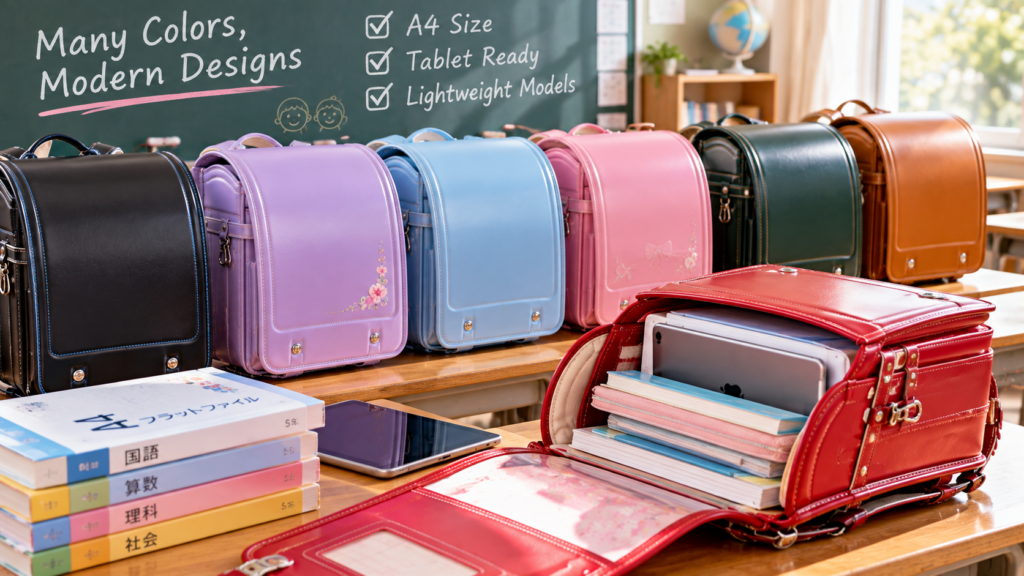
Put an older randoseru next to a modern one, though, and the family resemblance is obvious.
The materials changed. The colors changed. The things children put inside changed. The basic silhouette did not change nearly as much.
If Randoseru Are Heavy and Expensive, Why Not Use a Regular Backpack?
There is no technical reason why every elementary school child needs a traditional randoseru.
An ordinary backpack can be lighter and cheaper. Many have padded compartments for tablets, water-resistant fabrics, and comfortable shoulder straps. Depending on the model, they may also offer more flexible storage.
Some Japanese schools and municipalities already allow families to make that choice.
Machida City in Tokyo provides a useful example. As part of its efforts to reduce the burden of children’s school belongings, the city has experimented not only with alternative bags but also with changing what children need to bring home.
In the second trial at three elementary schools, involving 1,072 children, about 47% used a bag other than a randoseru. Children who frequently chose backpacks commonly cited reasons such as ease of use, lightness, and comfort.
That does not mean that nearly half of Japanese children are abandoning randoseru. It was a local trial designed specifically to encourage different ways of carrying school supplies.
What it does show is that when children are clearly given another option, a substantial number may take it.
Other municipalities have tried different approaches. Naruto City in Tokushima Prefecture, for example, has offered a lightweight school backpack free of charge to eligible incoming first graders who want one, with the aim of reducing physical and financial burdens.
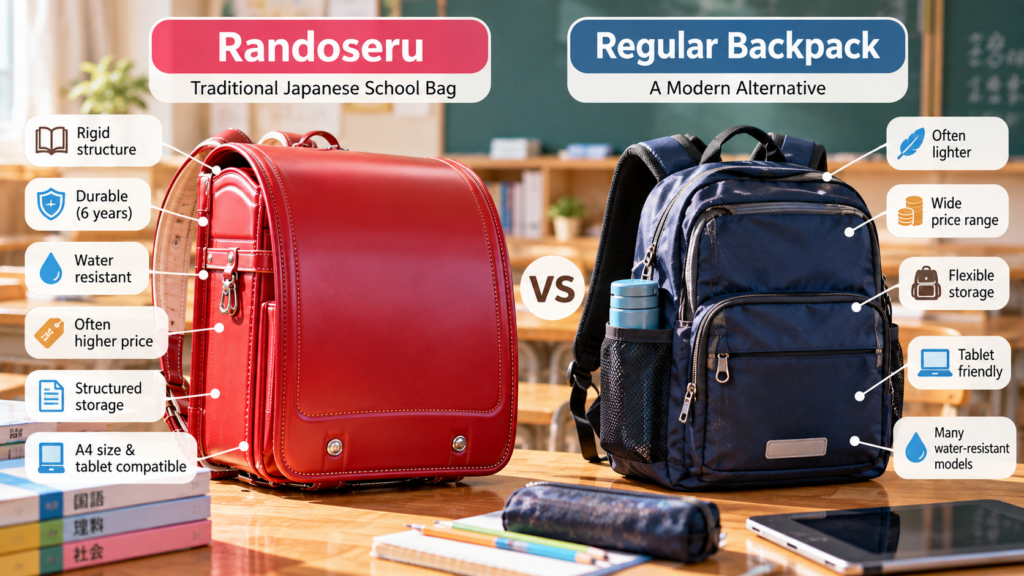
So an ordinary or lightweight backpack clearly can replace a randoseru in practical terms.
The comparison is less about whether one type of bag works and more about what a family values.
| Feature | Randoseru | Regular Backpack |
|---|---|---|
| Structure | Usually rigid and shape-retaining | Usually more flexible |
| Weight | Varies by model | Varies by model |
| Price | Often relatively high | Wide price range |
| Durability | Designed for long-term school use | Depends on the model |
| Storage | Structured compartments | Often more flexible |
| Tablet compatibility | Available in modern models | Commonly available |
If practicality were the only factor, the choice would probably be much less predictable.
But practicality is not the only factor.
So Why Are Randoseru Still So Common?
I asked myself what I would do if I were choosing a school bag today.
Suppose the choice was between a randoseru costing around ¥60,000 and a lightweight backpack costing ¥10,000 to ¥20,000. Assuming the school allowed both, which would I choose?
I would probably still lean toward the randoseru.
One reason is practical. I know how sturdy they can be, and I like the way the rigid body protects what is inside.
But there is another reason: other children would probably be carrying them.
If a school actively encouraged families to choose either type of bag, I might wait and see what other parents and children were doing before deciding.
That is only my reaction. It would be wrong to use it as evidence that all Japanese parents think the same way.
Still, it says something about how a tradition like this can continue without being compulsory.
Parents remember using randoseru themselves. Grandparents buy them as school-entry gifts. Children see older elementary school students wearing them. Stores fill their displays with them before the next school year begins.
At some point, a product can become the default without anyone having to make it a rule.
That may be one of the most important reasons the randoseru has lasted.
Will Randoseru Survive the Digital Classroom?
Now imagine that school becomes even more digital.
If a child eventually needs to carry little more than a tablet, stationery, a water bottle, and a few personal items, a large rigid randoseru becomes harder to justify purely on practical grounds.
I do not think that automatically means it will disappear.
The randoseru has already changed while retaining its familiar appearance. Modern versions are available in lighter materials, a much wider range of colors, and designs adapted to larger school materials and digital devices. At the same time, lightweight randoseru-style backpacks are making the line between the traditional bag and an ordinary backpack less clear.
The future may therefore be less about choosing between a randoseru and a backpack, and more about the two gradually borrowing features from each other.
Schools can change too. Reducing what children have to carry may ultimately matter more than shaving a few hundred grams from the bag itself.
There is no way to know exactly what Japanese school bags will look like decades from now. But the randoseru has already shown that it can change without completely losing its identity.
Conclusion: More Than a School Bag
When I was a child, I never wondered why I carried a randoseru.
Mine was black. Girls had red ones. We used them for six years.
That was simply what elementary school looked like.
Children today have far more choice. They can choose from colors I rarely, if ever, saw as a child. Lightweight alternatives exist. Some schools and municipalities are more open to other types of bags. And digital devices are changing what children need to carry.
If that trend continues, I am not sure I can argue that Japanese children will always need randoseru.
I also think children should be free to use a bag that works for them.
But I would still be sorry to see the randoseru disappear from Japanese childhood.
Not because every child needs one, and not because tradition should prevent schools from changing.
For me, and probably for many people who grew up carrying one, a randoseru was never just the bag that held our textbooks.
It was part of what going to elementary school looked like.