
I work in home-visit massage care in Japan, and fax is still part of the job.
Requests can arrive by fax, and reports are sometimes sent the same way. In my experience, fax is especially familiar when dealing with people in elderly care, including care managers and related service providers.
But outside work? I almost never use it.
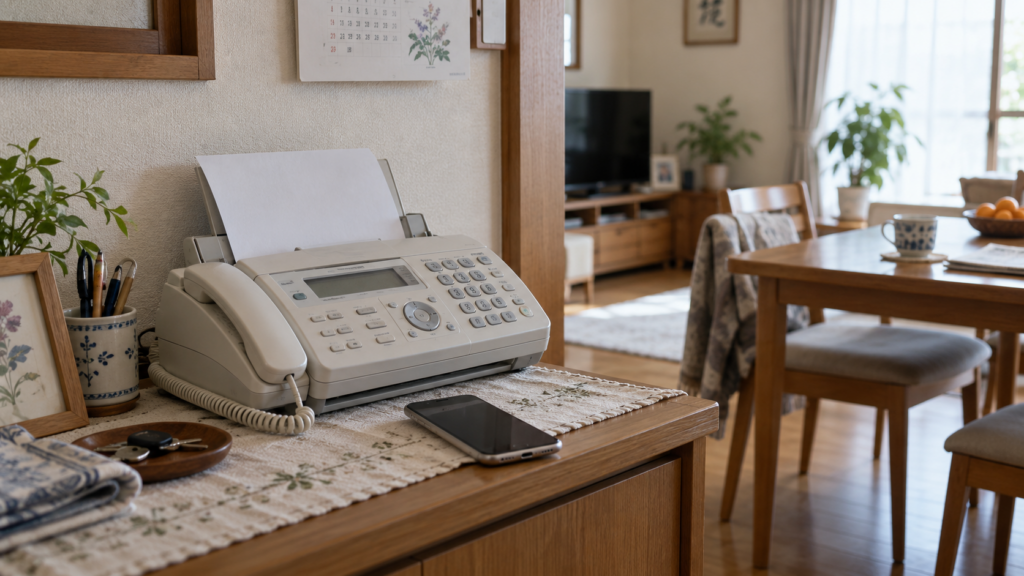
My parents’ home still has a fax machine, and years ago it was used for things such as mail-order purchases. Today, that feels increasingly like a remnant of an earlier era.
That contrast explains a lot about fax in modern Japan.
Japan is not a country where everyone is constantly faxing each other. Fax survives mainly inside particular workflows built around it — and those workflows cannot always be changed by one person or one company alone.
How Much Is Fax Actually Used in Japan?
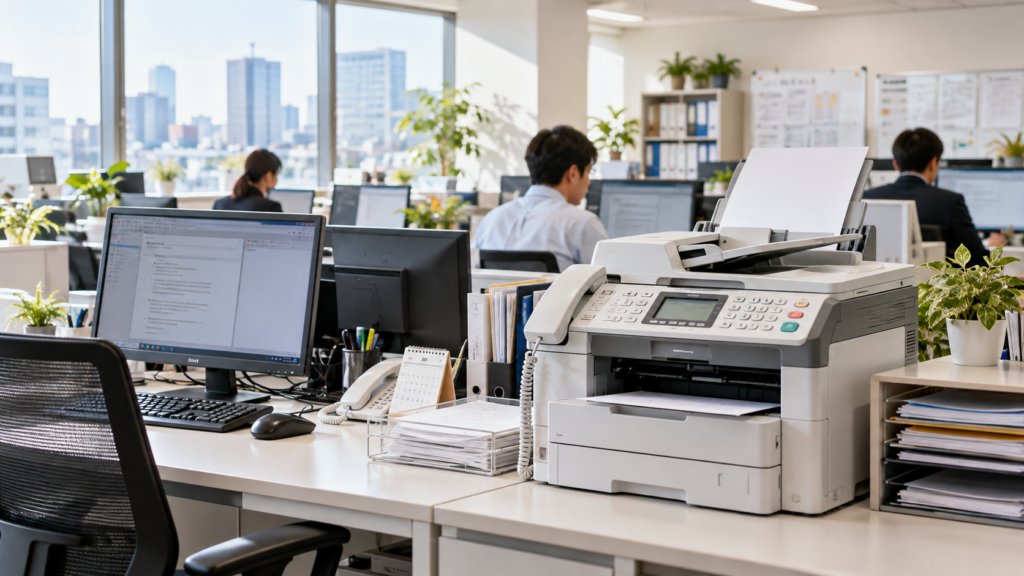
Fax is still used in Japanese workplaces, but the trend is clearly downward.
In a 2025 survey by the Communications and Information Network Association of Japan (CIAJ), about 4,600 employed adults aged 20 to 69 were asked about fax use at work. Some 37.9% said they used fax, down from 49.7% in 2020.
That does not mean 37.9% of Japanese companies use fax. The survey measured individual workers, not businesses. Still, the direction is clear: workplace use is declining.
CIAJ also reported that 45.3% of respondents had never used fax at work, describing fax as shifting from an everyday communication method toward a more specialized tool used only when needed.
That is a better description of Japan in 2026 than the old stereotype.
Fax is not thriving. It is surviving.
Japanese People Don’t Fax Everything
“Japan still uses fax” can create the wrong picture of everyday life.
Most private communication has long since moved to smartphones, messaging apps, email, online forms, and other digital services. I do not regularly send private faxes, and I would not expect younger people around me to do so either.
Older fax-equipped home telephones still exist. My parents still have one. In the past, fax could be useful for mail-order purchases and similar tasks.
But fax is most visible today not in Japanese homes, but in workplaces and industries where documents still move between organizations according to long-established procedures.
Where Fax Still Matters: Elderly Care and Paper-Based Workflows
My own work is one example.
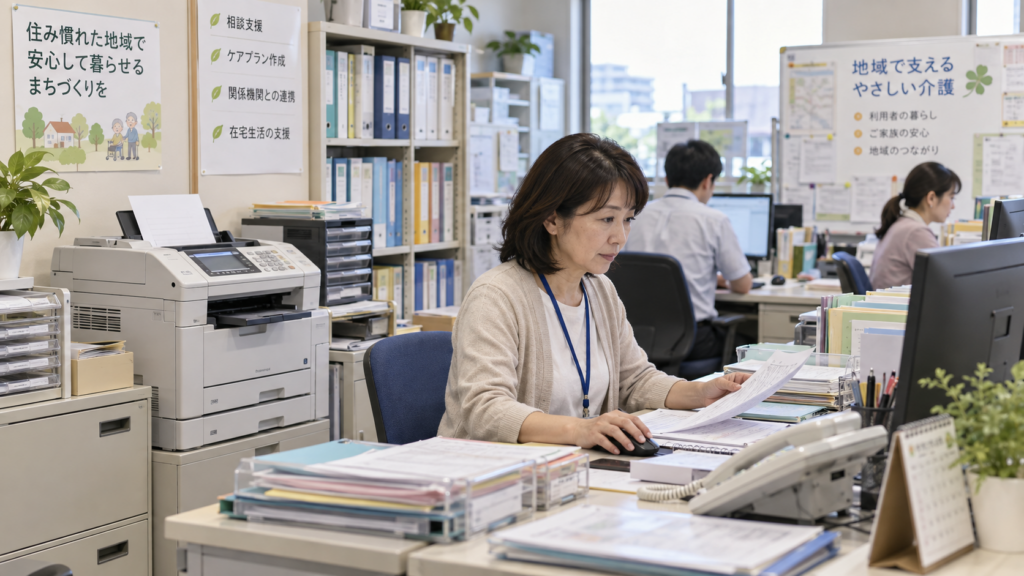
In home-visit massage care, we sometimes receive requests by fax and sometimes send reports by fax. Communication with care managers and others in the elderly-care sector is one area where fax still feels familiar.
A 2025 industry survey of 467 care managers working in home-care settings found that 95.3% used telephone calls for routine communication with service providers, while 79.7% used fax. Email was used by fewer respondents, and chat-style tools were less common still.
This was not a national government survey, so the result should not be treated as a nationwide usage rate. But it shows how deeply older communication methods can remain embedded in a sector.
The Japanese government has also been encouraging care providers to replace some paper, postal, and fax exchanges with structured digital data. The Care Plan Data Linkage System, for example, is designed to let care-management offices and service providers exchange information electronically instead of repeatedly printing, faxing, mailing, and re-entering the same information.
So Why Not Just Email a PDF?
This is the obvious question.
I have thought the same thing myself: why not just send an email?
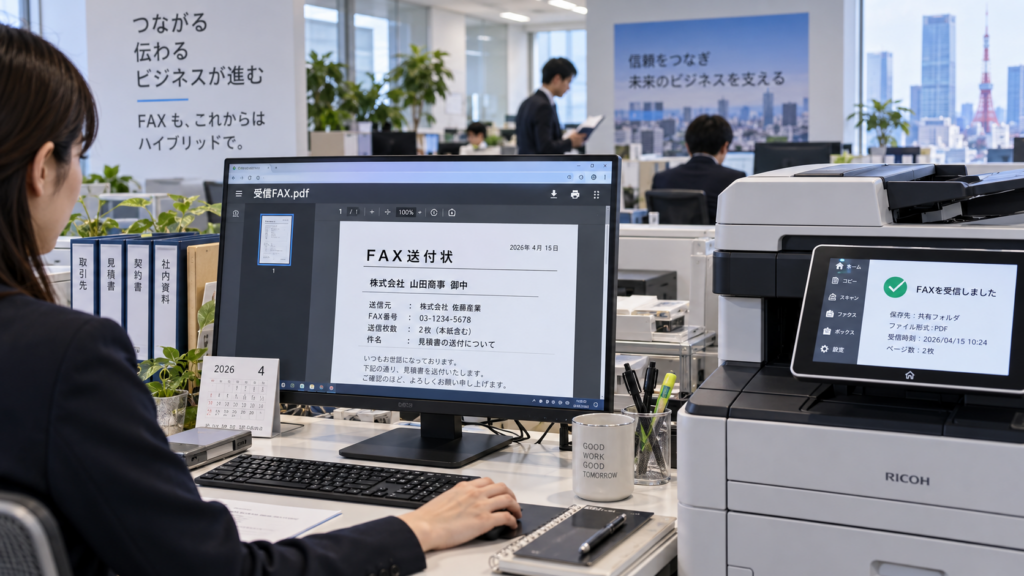
I have also heard of workflows in which faxed material ultimately becomes a PDF stored on a server. Modern multifunction printers and online fax services can even receive a fax digitally and save or forward it without printing anything.
If the final destination is digital, fax can look like an unnecessary extra step.
But the fax may not be there because it is the best way to store a document. It may be there because it is the agreed way for Organization A to deliver that document to Organization B.
Inside one company, fax can look redundant. Between two organizations, it may still be their common language.
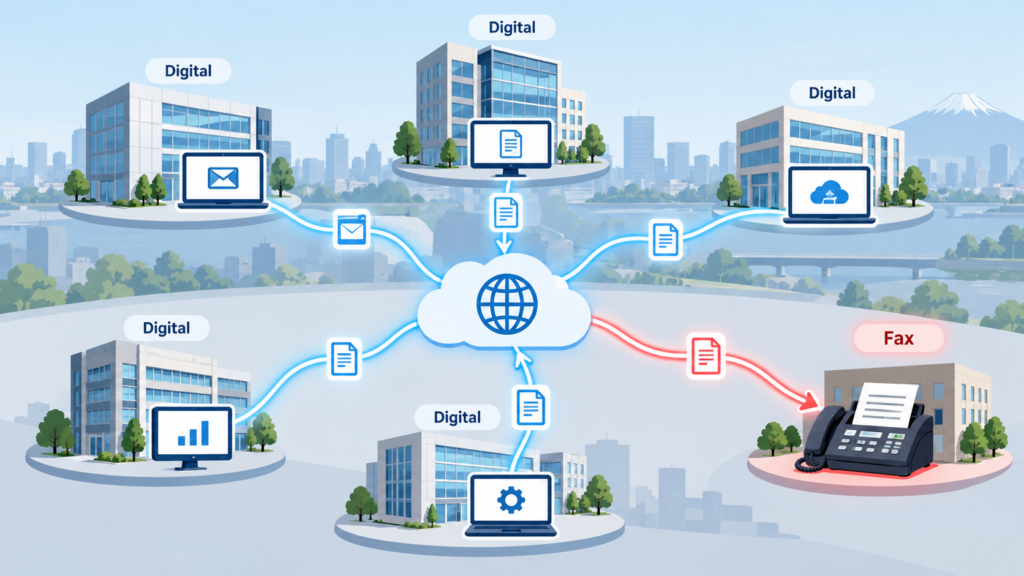
The Real Reason Fax Survives: Everyone Has to Change Together
Imagine a company works with 100 outside organizations.
Ninety-nine accept documents through email, a web portal, an electronic ordering system, or another digital service. But one important partner still requires fax.
Can the company remove fax completely? Probably not.
That remaining organization may also work with dozens or hundreds of partners. Changing the system could require new software, staff training, updated procedures, security reviews, and agreement from everyone involved.
This is where network effects and switching costs matter.
A communication system remains useful partly because other people already use it. Replacing it can be expensive or disruptive even when the alternative is newer.
I have heard a simple explanation in the workplace: the fax-based system is already built, and there has not been a strong enough reason to change it.
That is not uniquely Japanese. Businesses everywhere keep old systems when replacing them seems more disruptive than continuing to use them.
Fax survives not because it is better than email, but because communication systems are easiest to replace when both sides change together.
Fax Is Simple. That Still Has Some Value.
Fax does have practical advantages.
If you already have a paper document, sending it by fax requires little knowledge of the recipient’s IT environment. You do not need to know which cloud service they use, and the other side does not need the same software.
There is also something unusually visible about a fax.
In a busy email inbox, a message can disappear among many others. A fax arriving as a physical sheet of paper can be difficult to ignore. In my own experience, that visibility can be useful.
But I would not say fax is generally faster than email. Personally, I have rarely felt that fax itself was the quicker option.
Fax can be convenient when the workflow was already designed for fax.
Simple Doesn’t Mean Trouble-Free
Fax has ordinary problems too.
I have heard of documents being sent to the wrong number, reception failures caused by paper problems, and printing that did not work properly.
People sometimes assume fax is safer because it does not look like internet technology. But a mistyped number can send sensitive information to the wrong recipient, and a printed document can sit unattended where someone else can see it.
Email and online systems have different risks, including phishing, compromised accounts, malicious attachments, and misdirected messages.
Neither is automatically safer. They have different risk profiles.
A Fax in 2026 Doesn’t Always Mean a Fax Machine
“Japan still uses fax machines” can also be misleading because a fax in 2026 does not necessarily involve two dedicated machines printing paper.
Fax can be received through multifunction printers, computer systems, cloud fax services, and other digital tools. Documents may arrive electronically, be converted to PDF, forwarded by email, or stored on a server without ever becoming a sheet of paper.
CIAJ’s latest survey also notes increasing use of computers and smartphones in connection with fax.
The communication method can remain fax even while almost everything around it becomes digital.
The physical fax machine may disappear before the fax workflow itself does.
Japan Isn’t the Only Country Still Using Fax
Japan is unusual in how visible fax remains in certain industries, but it is not the only developed country dealing with legacy fax systems.
In March 2026, the U.S. Centers for Medicare & Medicaid Services announced a final rule intended to replace faxing and mailing of certain clinical documentation used for health-care claims with standardized electronic transactions. CMS estimated that the change could save the health-care industry roughly $782 million per year.
The point is not that the United States uses fax in exactly the same way as Japan. It is that even in 2026, a major American health-care system is still actively trying to remove fax from important administrative workflows.
Japan is not unique. What differs is where fax survives and how visible it remains.
Why Fax Is Slowly Disappearing
If fax is embedded in these workflows, will it ever disappear?
Probably, but not all at once.
The strongest pressure comes not from people deciding that fax looks old-fashioned, but from replacing the workflow itself.
In elderly care, structured data-linkage systems can allow information to move directly between organizations without printing a document, faxing it, receiving it, and entering the information again.
The same principle applies elsewhere. Web portals, electronic ordering systems, APIs, secure messaging, electronic signatures, and standardized data exchange can replace many of the jobs fax once handled.
But one organization becoming digital is not enough if the organizations around it cannot communicate in the same way.
That is why I do not think Japan needs to eliminate every fax machine tomorrow. Existing systems can continue to work while better alternatives gradually replace them.
And that appears to be what is already happening.
Japan Isn’t Living by Fax. Some Workflows Still Are.
The best way to understand fax in Japan is to forget the stereotype of a futuristic country mysteriously obsessed with obsolete technology.
Most Japanese people are not spending their private lives sending faxes. Workplace use is declining, digital alternatives are expanding, and younger generations have less reason to use fax at home.
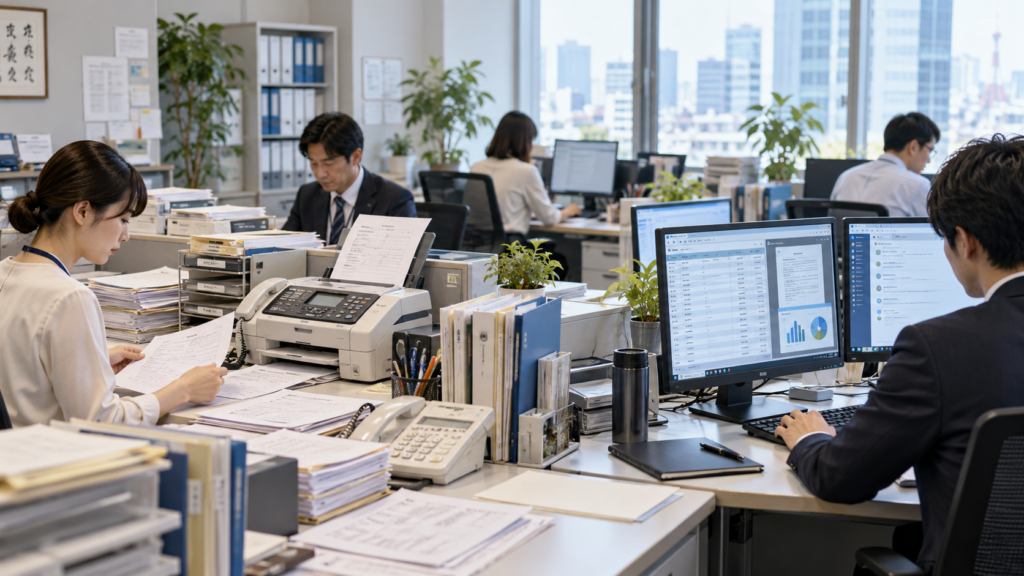
But some workplaces still depend on communication systems designed when fax was universal.
Fax survives because it is simple, familiar, already installed, and — most importantly — compatible with the organizations on the other side.
That does not make it the best technology available. It makes it difficult to remove until the surrounding workflow changes with it.
Japan’s fax machines are unlikely to vanish in one dramatic nationwide switch-off.
They are more likely to disappear one workflow at a time.