
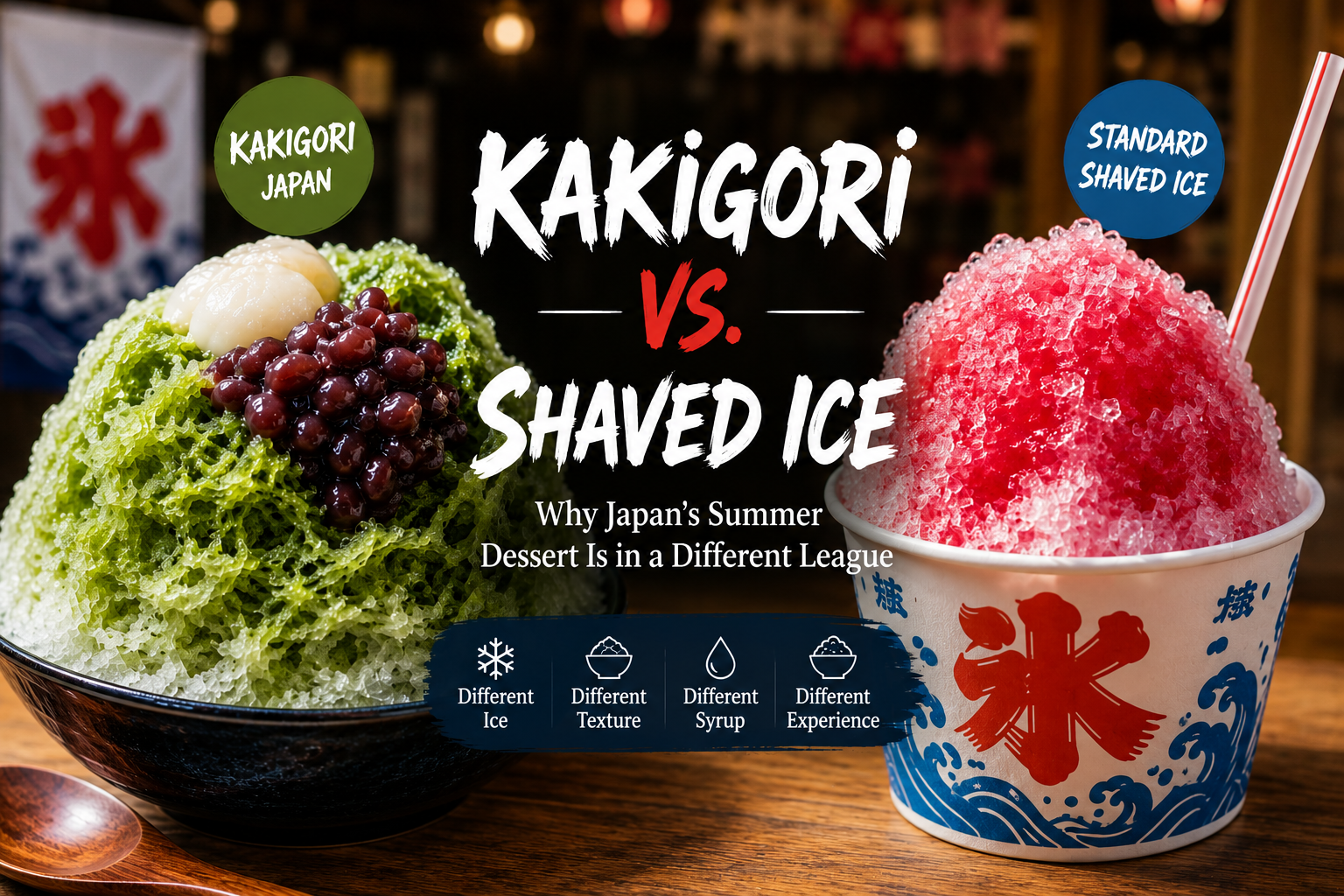
At first glance, kakigori looks like the shaved ice you get at a fairground or a beach stand. Same basic idea: ice, syrup, done. But spend five minutes eating both, and you will understand why Japanese people get genuinely offended by the comparison.
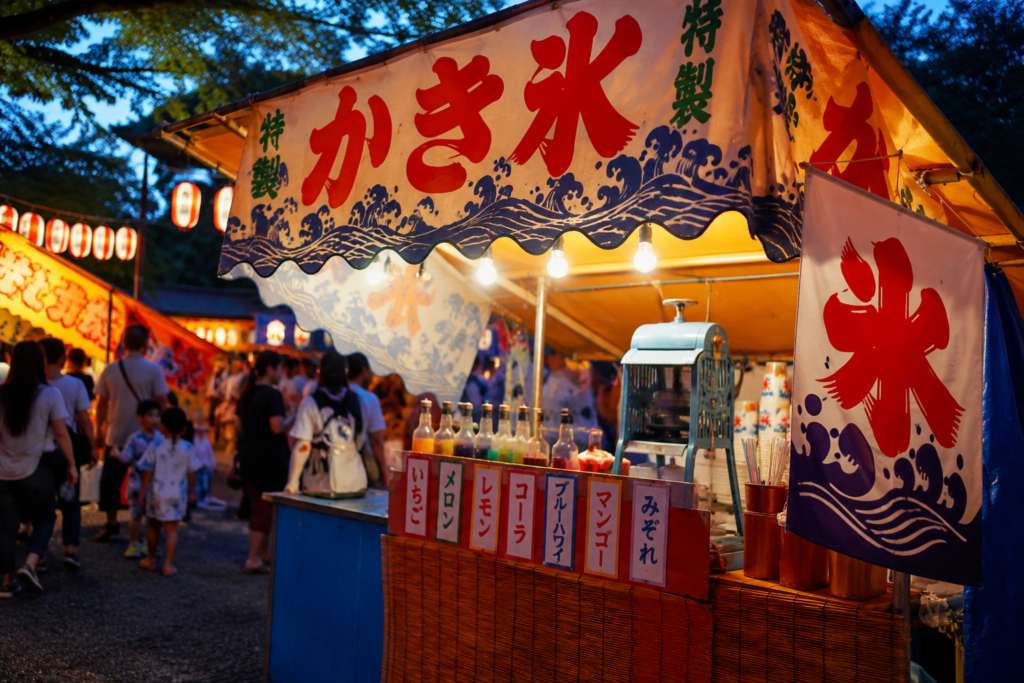
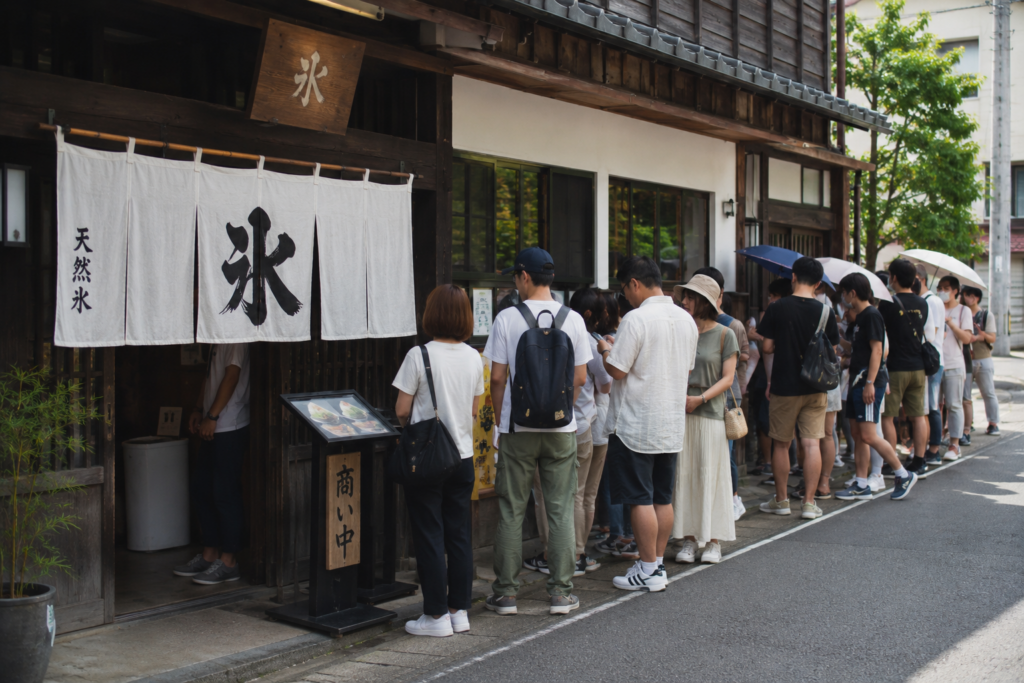
Every summer in Japan, lines form outside small shops that serve nothing but kakigori. Not ramen shops, not sushi restaurants — dedicated kakigori specialists, with queues stretching around the corner on days that exceed 35 degrees Celsius. People wait thirty minutes, sometimes longer, for a bowl of what is technically just frozen water with flavoring on top.
The fact that anyone would wait that long for shaved ice tells you something important: this is not shaved ice. Not really. And understanding why requires thinking about ice in a way most people never have.
The Texture Problem Nobody Talks About
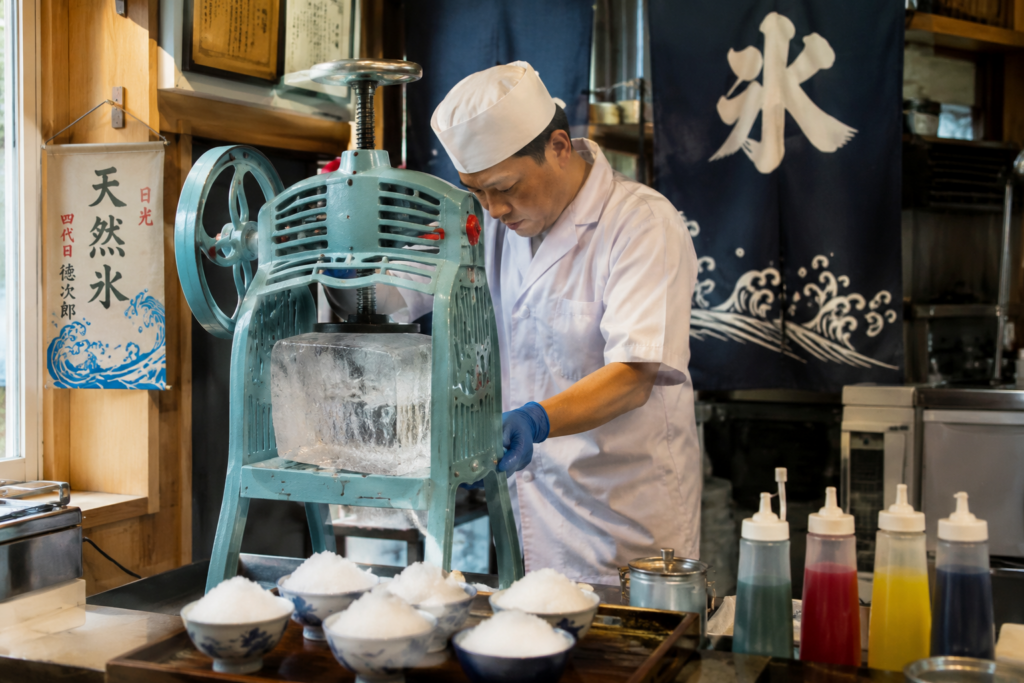
Standard shaved ice — the kind you get from a beachside cart in the United States, or a carnival stand in the United Kingdom — is made by running a block of regular ice against a fast-spinning blade. The result is coarse, slightly wet, and granular. It crunches. It melts unevenly. The syrup pools at the bottom. By the time you are halfway through, what you have is a sad puddle of sugar water with a lump of ice floating in it.
Kakigori does none of this. The texture is closer to snow than to ice — light, dry, and so fine that each mouthful dissolves almost before you realize you are chewing. There is no crunch. There is no pooling. The syrup does not sink; it soaks through evenly, the way rain soaks into fine sand. And it melts slowly, maintaining its structure from the first bite to the last.
This difference comes down to two things: the ice itself, and the blade used to cut it.
| Kakigori (Japan) | Standard Shaved Ice | |
|---|---|---|
| Ice type | Slow-frozen, dense pure block | Regular fast-frozen ice |
| Blade speed | Slow, ultra-thin shave | Fast, coarser cut |
| Texture | Fine snow, dissolves instantly | Grainy, wet, crunchy |
| Syrup | Absorbed evenly throughout | Sinks to the bottom |
| Melting | Holds shape, slow melt | Becomes watery quickly |
| Toppings | Layered mid-bowl and on top | On top only |
The Ice Makes All the Difference
Serious kakigori shops — and there are many who take this extremely seriously — use natural ice or specially manufactured pure ice blocks that are frozen very slowly over several days. The slow freezing process forces air bubbles out of the water as it solidifies, producing a denser, harder, clearer block. When this block is shaved, it produces a finer, more consistent crystal structure than fast-frozen commercial ice.
Some of the most celebrated kakigori shops in Japan source their ice from specific mountain regions where natural ice was historically harvested in winter and stored in insulated warehouses for summer use. This practice — nearly extinct by the mid-twentieth century — has seen a quiet revival as specialty kakigori shops look to differentiate their product. A bowl made with natural mountain ice can cost two or three times as much as one made with standard ice, and people pay it without much hesitation.
The Toppings: Where Kakigori Becomes a Serious Dessert
Standard shaved ice is topped with colored syrup. Sometimes a scoop of ice cream. That is largely where the creativity ends. Kakigori, by contrast, has evolved into a genuine dessert art form, with toppings that bear no resemblance to the blue-raspberry syrup you remember from childhood.
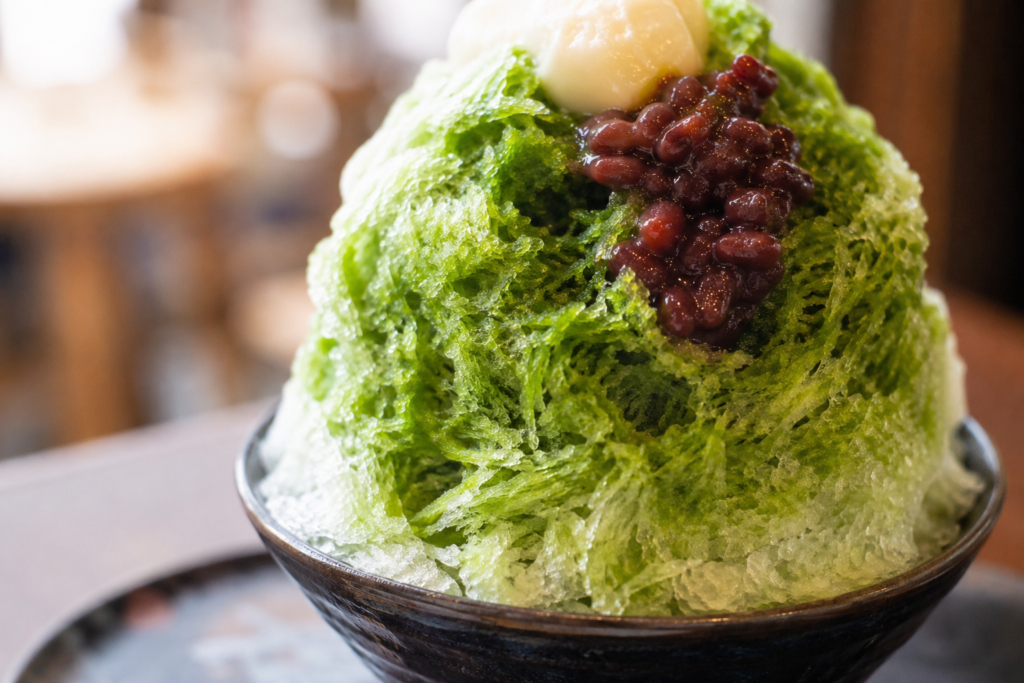
The most traditional version uses simple fruit syrups — strawberry, melon, lemon — made from real fruit rather than artificial flavoring. But contemporary kakigori, particularly from specialist shops, has expanded far beyond this. Matcha kakigori layered with sweetened condensed milk and red bean paste. Houjicha roasted tea versions with black sesame cream. Seasonal fruit editions built around whatever is ripe that week — peach in August, fig in September, citrus in winter.
Many shops layer their toppings mid-bowl rather than only on top, so every spoonful from anywhere in the bowl delivers the same balance of ice, syrup, and topping. This is a small technical detail that makes an enormous sensory difference.
| Flavor | What to expect |
|---|---|
| Matcha | Green tea syrup paired with condensed milk and sweet red bean. A classic combination. |
| Strawberry | The most traditional flavor. Quality shops use fresh strawberry syrup, not artificial. |
| Mango | Often made with Miyazaki or Okinawan mango — intensely sweet and deeply colored. |
| Houjicha | Roasted green tea, earthy and low in bitterness. Pairs well with milk-based toppings. |
| Ume | Sour Japanese plum syrup — refreshing and far more complex than it sounds. |
| Grape | Often made with Kyoho grapes — much richer and darker than Western grape flavoring. |
A Thousand Years of Frozen Dessert
Kakigori has existed in Japan for over a thousand years — the earliest written references appear in court literature from the Heian period, describing crushed ice flavored with sweet vine syrup served to the aristocracy. For most of its history, it was a seasonal luxury, available only to those with access to stored winter ice.
By the late twentieth century, kakigori had settled into the role of a humble summer snack — cheap, cheerful, and available at every summer festival and beach stand in Japan. A paper cone of ice with artificial strawberry syrup for ¥100. Beloved, but not taken seriously.
Then, around 2010, something shifted. A new wave of specialty kakigori shops began opening in Tokyo, Osaka, and Kyoto, treating the dessert with the same attention that specialty coffee shops were bringing to their craft. These shops invested in premium ice, made their own syrups from scratch, and designed menus that changed weekly based on seasonal ingredients. Food media took notice. Lines formed. And kakigori’s reputation quietly transformed from festival snack to serious dessert.
“We are not selling shaved ice. We are selling the season — whatever is at its peak right now, turned into something cold.”
Today, Japan has dedicated kakigori critics, seasonal menus that rotate by the week, and shops where reservations are required weeks in advance. The dessert has not fundamentally changed. What changed is the standards applied to its ingredients, its presentation, and its execution.
Where and When to Eat It
Kakigori is available from roughly June through September in most of Japan, with July and August being peak season. Outside summer, a small number of year-round specialty shops operate — mostly in major cities — but these are the exception rather than the rule. Part of what makes kakigori special is its seasonality. The anticipation built up over the rest of the year is part of the experience.
For visitors, the best kakigori is generally found not at tourist-facing shops but at small neighborhood specialists, traditional sweet shops, and the prepared-food stalls at summer festivals. Festival kakigori is usually the simpler, syrup-only version — excellent in its own right, and part of an authentic summer atmosphere. Specialist shop kakigori is where the craft version lives.
How to find and eat kakigori like a local
- Eat it immediately. Kakigori melts faster than you expect once served. Enjoy the first bite while the texture is at its best — don’t let it sit while you take photos.
- Don’t skip condensed milk. Many shops offer it as an optional add-on for ¥50–100 extra. It changes the richness and texture significantly. Say yes.
- Visit festival stalls. Summer festivals between July and mid-August are the most atmospheric place to eat kakigori, even if the version served is simpler than specialist shops.
- Go to Nara or Kyoto for tradition. These cities have some of Japan’s oldest kakigori shops, some with recipes unchanged for generations.
- Expect a wait at good shops. A long queue outside a kakigori shop is a reliable signal of quality. The wait is almost always worth it.
- Rainy days have shorter queues. A cooler or overcast summer day often means a much faster wait at otherwise-busy shops.
Why It Matters
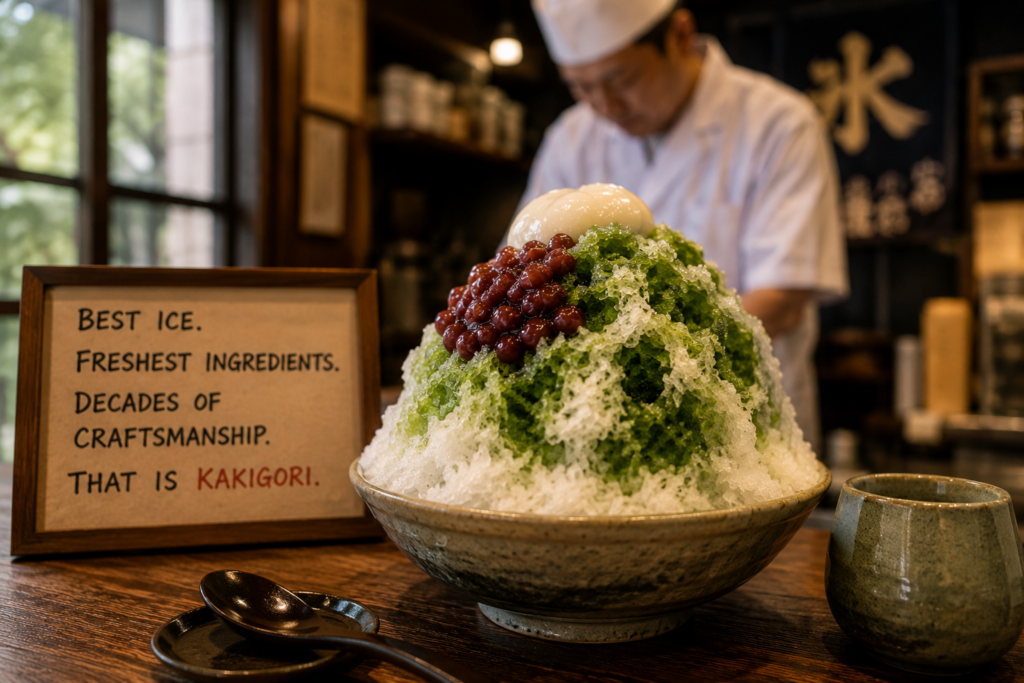
What kakigori represents — and what makes it worth seeking out as a visitor to Japan — is the same thing that makes Japanese convenience store sandwiches better than most deli sandwiches, and Japanese train station lunch boxes better than most restaurant meals. It is the application of genuine care and craft to things that most cultures treat as afterthoughts. The insistence that even a cheap summer dessert deserves the best ice you can source, the freshest fruit you can find, and a preparation method refined over decades.
You can get shaved ice anywhere. You can only get kakigori in Japan. And the next time you see a queue of people waiting in 35-degree heat for a bowl of frozen water, you will understand exactly why they are there.
Comments