
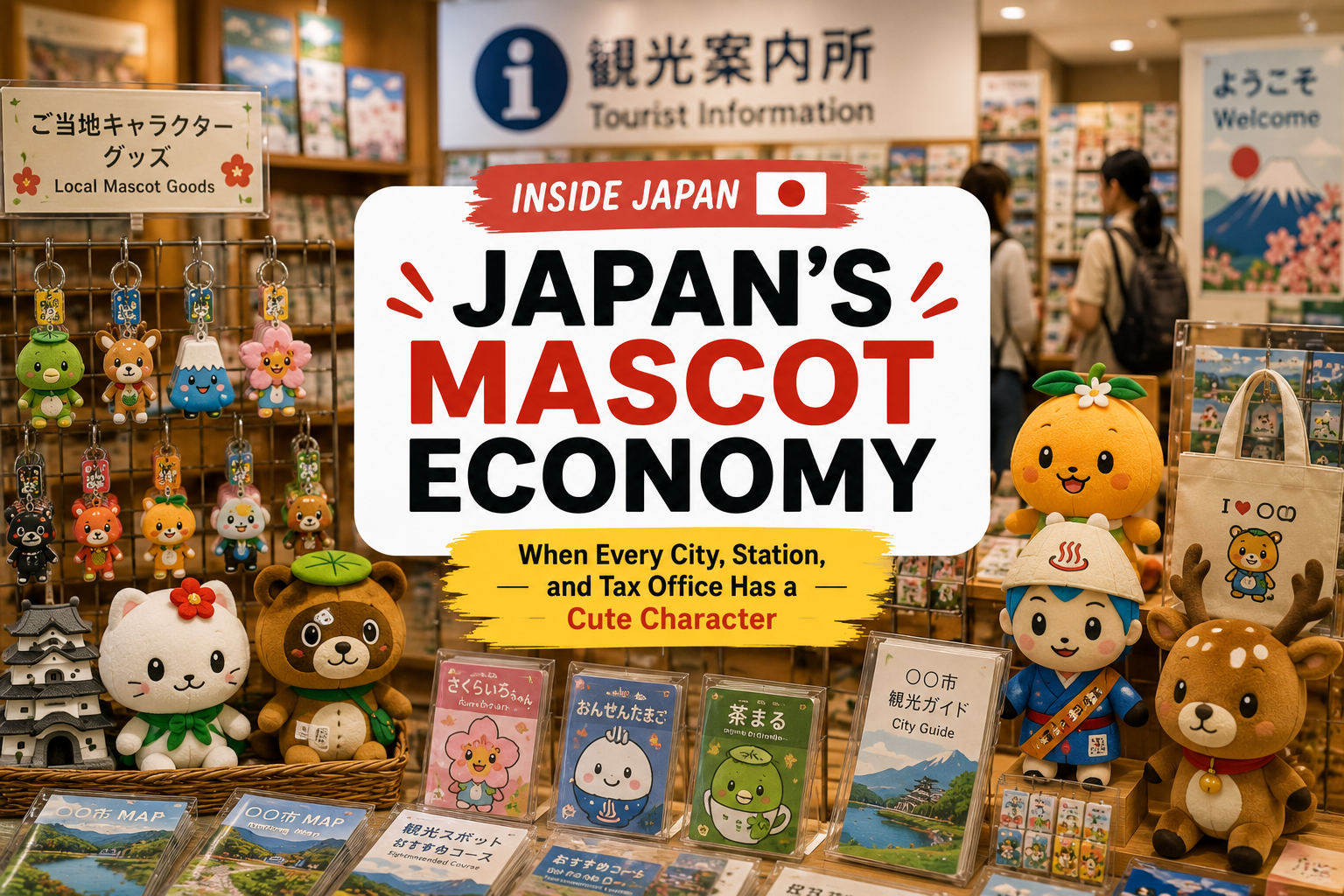
At some point during a trip to Japan, most visitors notice something strange: every city, every train line, every government department — even the local fire station — seems to have its own cartoon mascot character. This is not a coincidence. It is an entire economy.
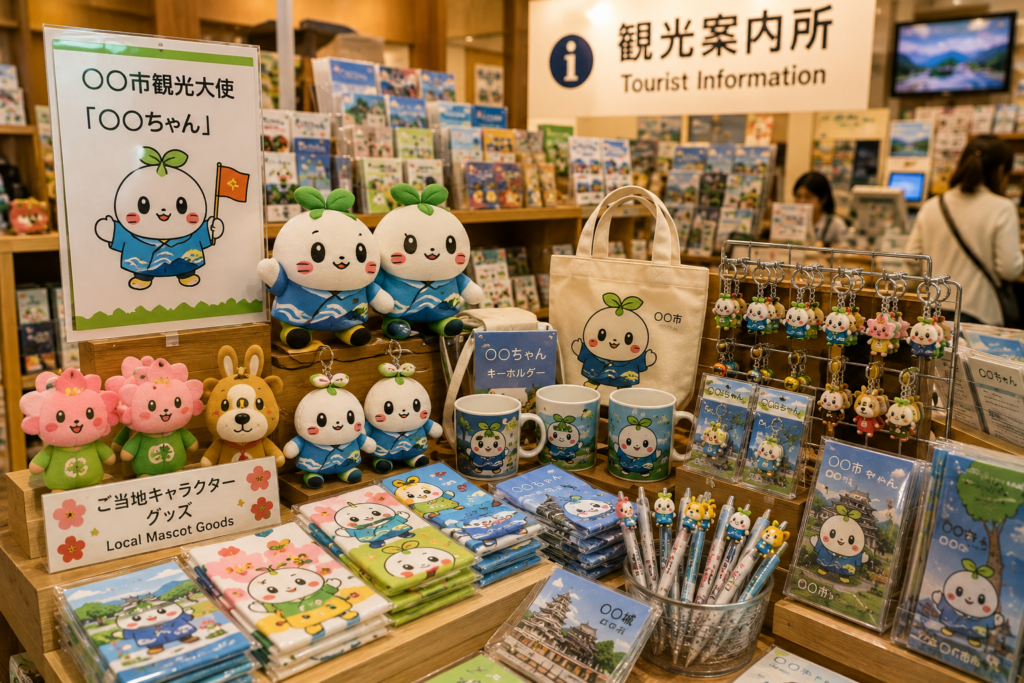
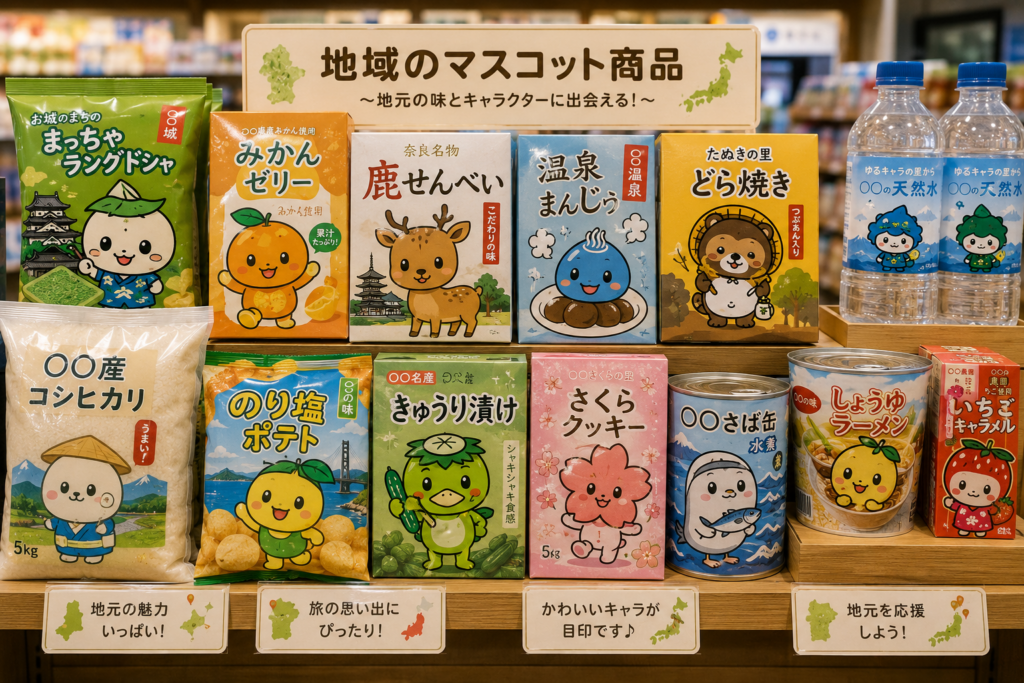
You might first spot one on a regional train: a round, cheerful creature printed on the seat covers, grinning from the doors, and embroidered onto the conductor’s badge. Then you arrive at a tourist information center and find the same type of character on brochures, key chains, and plush toys. Later, browsing a convenience store, you notice a prefecture’s mascot on a bag of local rice crackers. By the end of your trip, you have encountered dozens of these characters without ever learning a single name.
These are known informally as mascot characters — a phenomenon so deeply embedded in Japanese public life that most Japanese people no longer find them remarkable. To outside eyes, they are delightful, baffling, and completely unexplained.
What Are These Characters, Exactly?
Japan has thousands of official mascot characters representing every level of government and public institution imaginable. Prefectures have them. Cities have them. Individual neighborhoods have them. Train companies, airports, post offices, police departments, tax collection agencies, and agricultural cooperatives all have their own dedicated character designs.
The characters are almost universally cute — rounded, soft-edged, and expressive in ways that convey friendliness rather than authority. A mascot for a regional tax office might be a smiling coin with arms. A mascot for a municipal waste management department might be a cheerful garbage truck with eyes. The design brief for these characters seems to follow a single universal rule: make it approachable, make it round, and under no circumstances make it threatening.
| By the numbers | |
|---|---|
| Registered mascot characters competing in national contests | 1,700+ |
| Annual merchandise revenue generated by top mascots | ¥1.6 billion |
| Prefectures in Japan — every single one has at least one official character | 47 |
Where Did This Come From?
The roots of Japan’s mascot culture run deep — deeper than most people expect. Japan has a long tradition of anthropomorphizing objects and nature, stretching back centuries in art and folklore. The idea that a mountain, a river, or a household object might have a personality and a face is not new in Japanese visual culture.
The modern mascot character boom, however, is more recent. It accelerated significantly in the 1990s and 2000s, driven by two forces working together. The first was the success of characters like Hello Kitty and Pikachu, which demonstrated that a simple, cute design could generate enormous commercial value. The second was regional governments looking for ways to promote local tourism and products as Japan’s economy stagnated and younger populations migrated to cities.
Local governments discovered that a well-designed character could appear on everything — packaging, signage, merchandise, event materials — creating a consistent and friendly visual identity for a place that might otherwise struggle to stand out. The mascot became a form of soft marketing that nobody had to be sold on, because it was simply everywhere.
The word behind the phenomenon
The term most commonly used in Japan translates loosely as “loose character” — referring to the slightly wobbly, imperfect quality of many regional mascot designs compared to the polished characters of major entertainment companies. This imperfection became part of the charm.
Famous Examples You Might Actually Recognize
Among Japan’s thousands of mascot characters, a handful have broken through to genuine national and international fame.
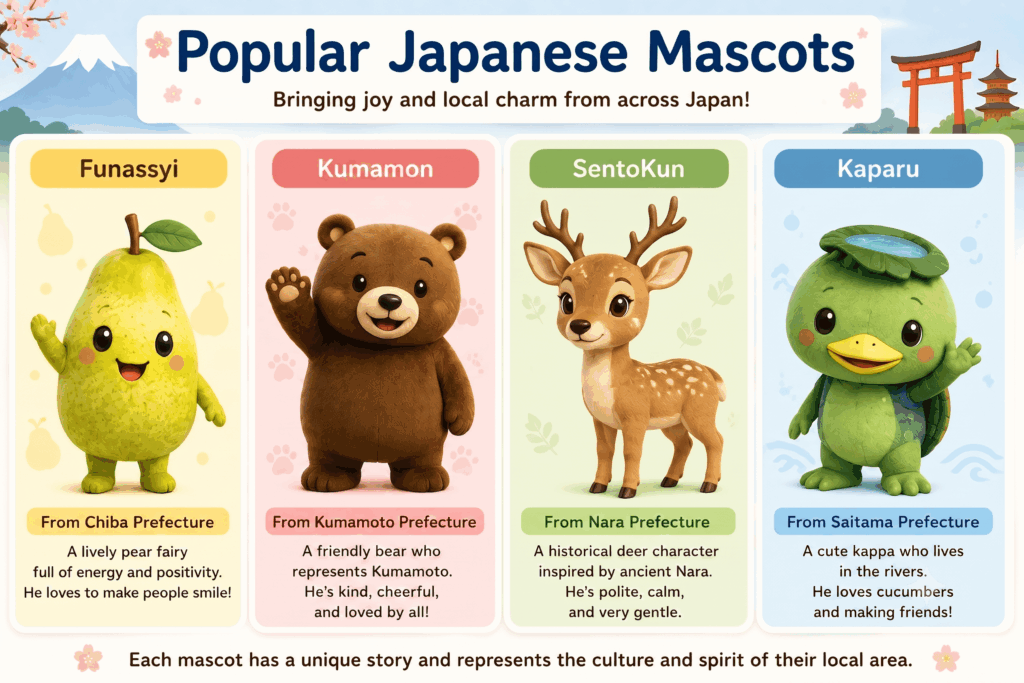
| Character | Represents | What makes it notable |
|---|---|---|
| Funassyi | Funabashi City, Chiba | An unofficial pear fairy who became so popular that the city eventually acknowledged him. Known for high-energy stage performances and a surprisingly large international following. |
| Kumamon | Kumamoto Prefecture | Arguably Japan’s most commercially successful regional mascot. A round black bear with red cheeks whose merchandise generates billions of yen annually for the prefecture. |
| Sento-kun | Nara City | A Buddha figure with deer antlers created for a historical anniversary. Deeply controversial when unveiled, now beloved — a good example of how Japan’s mascot culture tolerates genuine weirdness. |
| Kaparu | Saitama Prefecture | A river creature mascot whose design — part mythical beast, part local legend — illustrates how regional characters try to encode local identity into a single image. |
Kumamon deserves particular attention. Created in 2010 to promote Kumamoto Prefecture, the character has since become one of the most recognizable brand images in Japan. The prefecture licenses the image for free to businesses that agree to use it in connection with Kumamoto products — an unusual decision that turned out to be brilliant. Kumamon appears on everything from potato chips to airline seat covers, and the prefecture estimates the character generates over a billion yen in economic activity annually.
“A mascot is not decoration. It is infrastructure. It is how a place talks to people who have never been there.”
The Annual Mascot Championship
Perhaps the clearest sign that Japan’s mascot culture operates at a scale unlike anything elsewhere in the world is the existence of a national mascot ranking competition, held annually and taken extremely seriously by the municipalities that participate.
Every year, thousands of registered mascot characters compete for votes from the public in an online contest. Local governments actively campaign for their characters. Schools organize voting drives. Regional news covers the standings. The winning character receives significant media coverage and a boost in merchandise sales that local economies genuinely plan around. Losing, conversely, can prompt a full redesign of a mascot that has been in circulation for years.
It is a popularity contest for cartoon characters run by the government, covered by the press, and decided by public vote. In most countries, this sentence would sound absurd. In Japan, it is simply the annual mascot championship.
Why It Works
The obvious question from an outsider’s perspective is: why? Why would a tax office need a mascot? Why would a sewage authority spend money designing a cute character to represent its work?
The answer lies in how Japan thinks about the relationship between institutions and the public. In many Western contexts, government agencies and public utilities communicate through formal language and official branding — logos, seals, and tone that signals authority. In Japan, there is a parallel track. A mascot does not replace official communication; it runs alongside it, softening the relationship between institution and citizen in a way that is distinctly Japanese.
A friendly character on a tax reminder notice makes the notice feel slightly less like a threat. A cute mascot at a road safety booth makes the booth more likely to attract attention from passing children. A regional character on a bag of local produce creates an emotional connection between a buyer and a place they may have never visited. None of this is accidental. It is a deliberate communications strategy, scaled across every level of public life.
- Check tourist information centers. Almost every city’s tourist office has free mascot merchandise — stickers, paper fans, bookmarks — that make excellent and unusual souvenirs.
- Look at train seat covers and doors. Regional rail lines frequently feature their mascots throughout the train interior, sometimes changing the design seasonally.
- Visit local supermarkets. Regional mascots appear on locally produced food products. The character on a bag of rice or a box of mochi often represents the prefecture or city where it was made.
- Search for the character before you visit a region. Almost every prefecture’s mascot has an English-language Wikipedia page and an active social media presence. Knowing the local character before you arrive makes spotting it everywhere much more satisfying.
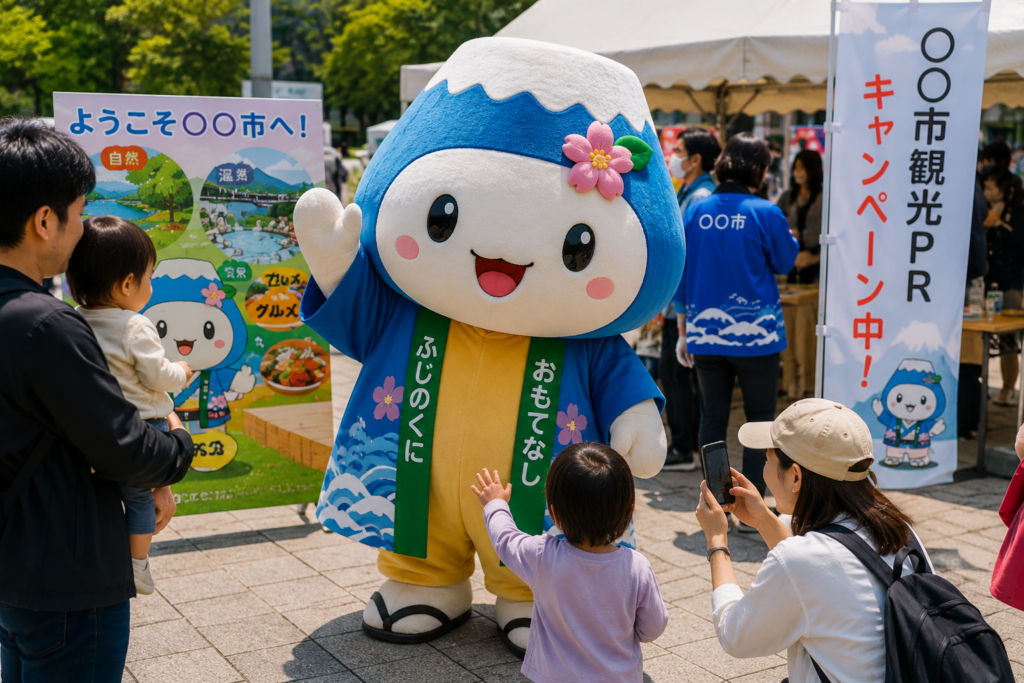
- Look for the costume at events. Major festivals and public events almost always feature a human-sized mascot costume appearance. Queues to take photos with them are not just for children.
A Country That Communicates in Characters
Japan’s mascot economy is, in the end, a reflection of something broader about how the country communicates. Cuteness — the Japanese concept of which runs far deeper and more seriously than the English word suggests — is not considered childish or trivial in Japanese public life. It is a legitimate register, used deliberately in contexts that most other countries would reserve for formal language alone.
The result is a country where a trip to the post office might involve buying a plush toy of the postal mascot, where a highway rest stop has its own character with its own merchandise range, and where a regional tax authority considers it entirely normal to have a smiling cartoon figure as its public face.
It is strange and charming and completely logical once you understand the logic. And once you start noticing it, you will find mascot characters absolutely everywhere in Japan — grinning from walls, bobbing on key chains, and waving from the sides of delivery trucks — in a country that has decided, collectively, that there is no institution so serious it cannot benefit from a friendly face.
Comments